| Annickia polycarpa | |
|---|---|
Scientific classification 
| |
| Kingdom: | Plantae |
| Clade: | Embryophytes |
| Clade: | Tracheophytes |
| Clade: | Angiosperms |
| Clade: | Magnoliids |
| Order: | Magnoliales |
| Family: | Annonaceae |
| Genus: | Annickia |
| Species: | A. polycarpa
|
| Binomial name | |
| Annickia polycarpa | |
| Synonyms2 | |
| |
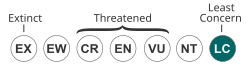
Annickia polycarpa is a species of flowering plant in the Annonaceae family. It is commonly known as African Yellow Wood. It is small to medium-sized tree found in evergreen forests of tropical West Africa and Cameroon.2
Description
Annickia polycarpa is a small to medium-sized tree capable of reaching 20 meters tall and 40 cm in diameter.34 Bark is usually smooth and occasionally, somewhat rough, fairly thick, with fibrous inner bark, black to greenish in color.4 Petiole is sparsely pubescent, 3–8 mm long; leaf-blade is oblong, elliptical or obovate in outline with a papery surface, 5–27 cm long and 4–8 cm wide, acuminate at the apex and rounded at the base, covered with stellate hairs below.3 Solitary flowers on young shoots, pedicel is 0.9-1.9 cm long; sepal: three, triangular shaped, pubescent on the outside, inside is slightly pubescent, petals: yellow when fresh, elliptic in outline, up to 3 cm long.3 Flowering season is between July and August.
Distribution
It grows in the Upper and Lower Guinean forests of west and west-central Africa, from Guinea to Cameroon. In Ivory Coast it grows as an understorey in dense forests.5
Chemistry
Bark extracts shows presence of quinolic and isoquinolic class of alkaloids; compounds extracted from leaves and bark of the species have been reported to contain corydaldine, aporphinoids, berberines and protoberberine groups of alkaloids, .6
Uses
Bark extracts are used by herbalists in traditional treatment of malaria related symptoms, ulcers and leprous spots.6 Stem bark is used for constructing huts, and a yellow dye obtained from the species is used for dyeing cloths, mats and leather.547
References
References
- Cosiaux, A.; Couvreur, T.L.P.; Erkens, R.H.J. (2019). "Annickia polycarpa". IUCN Red List of Threatened Species. 2019 e.T132513477A132513624. doi:10.2305/IUCN.UK.2019-3.RLTS.T132513477A132513624.en. Retrieved 21 June 2026.
- "Annickia polycarpa (DC.) Setten & Maas ex I.M.Turner". Plants of the World Online. Royal Botanic Gardens, Kew. Retrieved 21 June 2026.
- Versteegh, Corstiaen P. C.; Sosef, Marc S. M. (2007). "Revision of the African Genus Annickia (Annonaceae)". Systematics and Geography of Plants. 77 (1): 91–118. ISSN 1374-7886. JSTOR 20649730.
- Timbers 2. R.H.M.J. Lemmens, D. Louppe. Wageningen: PROTA Foundation. 2012. ISBN 978-92-9081-495-5. OCLC 808216267.
{{cite book}}: CS1 maint: others (link) - Yapi, Thierry Acafou; Ouattara, Zana Adama; Boti, Jean Brice; Tonzibo, Zanahi Félix; Paoli, Mathieu; Bighelli, Ange; Casanova, Joseph; Tomi, Félix (2018). "Composition and Chemical Variability of Enantia polycarpa Engl . & Diels Leaf Essential Oil from Côte d'Ivoire". Chemistry & Biodiversity. 15 (7) e1800061. doi:10.1002/cbdv.201800061. PMID 29754407. S2CID 21672436.
- Anosa, George N.; Udegbunam, Rita I.; Okoro, Josephine O.; Okoroafor, Obianuju N. (2014-04-28). "In vivo antimalarial activities of Enantia polycarpa stem bark against Plasmodium berghei berghei in mice". Journal of Ethnopharmacology. 153 (2): 531–534. doi:10.1016/j.jep.2014.02.022. ISSN 0378-8741. PMID 24561382.
- Dalziel, J.M. (1926). "African Leather Dyes". Bulletin of Miscellaneous Information. 6 (6). Royal Botanic Gardens, Kew: 230. doi:10.2307/4118651. JSTOR 4118651.