Angelillo | |
|---|---|
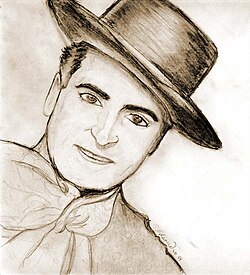 Artist's depiction of Angelillo | |
| Background information | |
| Born | Ángel Sampedro Montero (1908-01-12)January 12, 1908 Vallecas, Madrid, Spain |
| Died | (1973-11-24)November 24, 1973 Buenos Aires, Argentina |
| Genres | Flamenco, Copla, Spanish folk music |
| Occupations | Singer, actor |
| Years active | 1920s–1970s |
| Label | Various |
Ángel Sampedro Montero (12 January 1908 in Vallecas, Madrid- 24 November 1973 in Buenos Aires, Argentina), better known as Angelillo, was a Spanish singer of popular songs in his time. He has been described as a "popular idol of the flamenco copla",1 a very particular style of flamenco, along with fandangos, soleares, saetas, caracoles and tarantas etc. He was also one of the earliest singers to sing in a forced falsetto in flamenco.2 He was also an actor in musical films of Andalusian folklore: He appeared in films such as La hija de Juan Simón (1935) and Suspiros de Triana (1955), becoming a film star for Filmófono and working with esteemed directors such as Luis Buñuel, which led to him being nicknamed “the nightingale of Andalusia”.3
Angelillo was one of the most outspoken advocates of the Republic, with communist ideologies.4 He fled to Oran and from there, accompanied by Sabicas, to Argentina, where he quickly gained immense popularity. He returned to Spain in the 1950s.
References
References
- Peiró, Eva Woods (24 January 2012). White Gypsies: Race and Stardom in Spanish Musicals. U of Minnesota Press. p. 136. ISBN 978-0-8166-4584-8. Retrieved 15 July 2012.
- Pohren, Donn E. (16 June 2005). The Art of Flamenco. Bold Strummer Ltd. p. 162. ISBN 978-0-933224-02-5. Retrieved 15 July 2012.
- Gubern, Román; Hammond, Paul (4 January 2012). Luis Buñuel: The Red Years, 1929-1939. University of Wisconsin Pres. p. 203. ISBN 978-0-299-28474-9. Retrieved 15 July 2012.
- Aranda, J. Francisco (May 1976). Luis Buñuel: a critical biography. Da Capo Press. p. 109. ISBN 978-0-306-70754-4. Retrieved 15 July 2012.