

Andhra Pradeshb is a state on the east coast of southern India. It is the seventh-largest state and the tenth-most populous in the country. Telugu, one of the classical languages of India, is the most widely spoken language in the state and serves as its official language. Amaravati is the state capital, and Visakhapatnam is the largest city. Andhra Pradesh shares borders with Odisha to the northeast, Chhattisgarh to the north, Karnataka to the west, Tamil Nadu to the south, Telangana to northwest and the Bay of Bengal to the east.
According to archaeological evidence, Andhra Pradesh has been continuously inhabited from early archaic hominins through Neolithic settlements. The earliest known reference to the Andhras appears in the Aitareya Brahmana (c. 800 BCE) of the Rigveda. Around 300 BCE, the Andhras living in the Godavari and Krishna river deltas were described by contemprory sources as having military strength only to the Maurya Empire in the Indian subcontinent. The first major Andhra polity was the Satavahana dynasty (2nd century BCE – 2nd century CE), which ruled over the entire Deccan Plateau and extended into western and central India. The Satavahanas established trade relations with the Roman Empire, and according to historian Stanley Wolpert, their capital, Dhanyakataka, may have been the most prosperous city in India during the 2nd century CE. Subsequent major dynasties included the Vishnukundinas, Eastern Chalukyas, Kakatiyas, Vijayanagara Empire, and Qutb Shahis, followed by British rule. After India gained independence, Andhra State was carved out of Madras State in 1953. In 1956, it merged with the Telugu-speaking regions of the former Hyderabad State (Telangana) to form Andhra Pradesh. The state reverted to its earlier form in 2014, when the new state of Telangana was bifurcated from it.
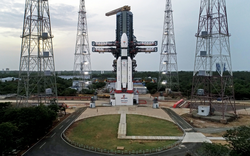
The Eastern Ghats separate the coastal plains from the peneplains. Major rivers include the Krishna, Godavari, Tungabhadra and Penna. According to government estimates, Andhra Pradesh holds approximately one-third of India's limestone reserves and significant deposits of baryte and granite. Agriculture and related activities employ 62.17% of the population, with rice as the staple crop. The state contributes 30% to India's fish production and accounts for 35% of the country's seafood exports. The Sriharikota Range, located on Sriharikota island in Tirupati district, serves as India's primary satellite launch centre.
Andhra is the birthplace of the Amaravati school of art, an ancient Indian art style that influenced South Indian, Sri Lankan, and Southeast Asian art. The state is also home to Kuchipudi, one of India's classical dance forms, and has produced several Carnatic music composers. The state includes pilgrimage centres and natural attractions, such as the Venkateswara temple in Tirumala and the Araku Valley. Products with geographical indication (GI) registration include Tirupati Laddu, Banganapalle mangoes, Kondapalli toys, Dharmavaram sarees, and Pootharekulu.
Etymology
The Andhras are mentioned in the Aitareya Brahmana of the Rigveda (c. 800–500 BCE) as descendants of the sage Vishvamitra.8 In these texts, Andhras are referred to as non-Aryans living on the fringes of Aryan settlements.910 The Satavahanas, the earliest dynasty known to have ruled this region, are referred to as Andhra, Andhrara-jateeya, and Andhrabhrtya in the Puranic literature. Accrording to scholars, "Andhra" functions as both a tribal and a territorial name.11 The region inhabited by the Andhras was called Andhradesa.12
According to Iravatham Mahadevan, the term 'āndhra' is derived from the Old Telugu masculine nominative marker 'aṉṟu', possibly used by Indo-Aryan people or Buddhists to refer to Telugu people.13
Pradesh means "state" or "province".
History
Pre-history
Stone tools excavated from Hanumanthunipadu in Markapuram district have been dated to approximately 247,000 years old (Middle Paleolithic). This dating suggests that these tools were developed by archaic hominins, as such tools were previously thought to have been used by modern humans migrating from Africa about 210,000 years ago. According to the study authors, the absence of fossil evidence has left unanswered questions about the fate of these populations.14 The discovery of petroglyphs, pictographs, and dolmens in Chakrala Bodu, near Boyalapalli village in the Yerragondapalem mandal area of Markapuram district, indicates the presence of Neolithic human settlements in the region.15
Early and medieval history

The Greek historian Megasthenes reported in his Indica (c. 310 BCE) that Andhras lived in the Godavari and Krishna river deltas and were known for their military strength, which he ranked second only to the Mauryans in all India.161718 Archaeological evidence from sites such as Bhattiprolu, Amaravathi, and Dharanikota suggests that the Andhra region was part of the Mauryan empire. After the death of Emperor Ashoka, Mauryan rule weakened around 200 BCE and was replaced by several smaller kingdoms in the Andhra region.19 An urn containing relics of Buddha,found at Bhattiprolu bears one of the earliest examples of the Brahmi script.20 This inscription is considered a key for deciphering Tamil Brahmi.21 The Kadamba script, derived from Bhattiprolu Brahmi, later continued to the evolution of Telugu and Kannada scripts.22
The Satavahana dynasty dominated the Deccan Plateau from the 1st century BCE to the 3rd century CE.23 It had trade relations with the Roman Empire.24 The Satavahanas made Dhanyakataka-Amaravathi their capital. According to historian Stanley Wolpert, it might have been the most prosperous city in India in 2nd century CE.2526 Nagarjuna, the philosopher of Mahayana, lived in this region.272829 Mahayana spread to China, Japan, and Korea. It became the largest Buddhist denomination in the world.3031 Amaravati School of Art is regarded as one of the three major styles of ancient Indian art and had a great influence on art in South India, Sri Lanka, and Southeast Asia.32 The Andhra Ikshvakus, with their capital at Vijayapuri, succeeded the Satavahanas in the Krishna River valley in the latter half of the 2nd century CE.33 The Salankayanas were an ancient dynasty that ruled the Andhra region between Godavari and Krishna rivers with their capital at Vengi (modern Pedavegi) around 300 CE.34 Telugu Cholas ruled present-day Kadapa region from the six to the thirteenth centuries intermittently.35 Kallamalla sasanam (law), engraved in 575 CE during the rule of Dhanamjaya, is the earliest completely Telugu inscription.36

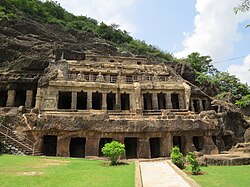
The Vishnukundinas was the first dynasty in the fifth and sixth centuries to hold sway over South India.37 Undavalli Caves is an example of Indian rock-cut architecture of that time.38 The Eastern Chalukyas of Vengi, whose dynasty lasted for around five hundred years from the 7th century until 1130 CE, eventually merged with the Chola dynasty. They continued to rule under the protection of the Chola dynasty until 1189 CE.39 At the request of King Rajaraja Narendra, Nannaya, considered the first Telugu poet, took up the translation of the Mahabharata into Telugu in 1025 CE.40
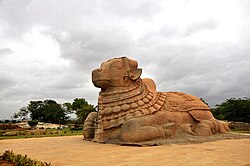
Kakatiyas ruled present-day Andhra Pradesh and Telangana for approximately two centuries between the 12th and 14th centuries, until they were defeated by the Delhi Sultanate.41 The Bahamani sultanate took control after the Delhi Sultanate weakened.4243 Around the same time, Musunuris and the Reddi Kingdom ruled parts of the region in the early 14th century.44 The Reddy kings constructed Kondaveedu Fort and Kondapalli Fort.4546 The Gajapatis ruled parts of the region before it became part of the Vijayanagara Empire during the reign of Krishnadevaraya.47 The Pemmasani Nayaks controlled parts of Andhra Pradesh and maintained large mercenary armies that served as the vanguard of the Vijayanagara Empire in the 16th century.4849 Several tanks and anicuts were built. Some of these include the Cumbum tank, Mopad tank, and Koregal anicut, Vallabhapur anicut across the Tungabhadra River.50 According to historians, the Vijayanagara Empire's patronage enabled fine arts and literature to reach new heights in Kannada, Telugu, Tamil, and Sanskrit, while Carnatic music evolved into its modern form.51 The Lepakshi group of monuments, built during this period, features mural paintings of Vijayanagara kings, Dravidian art, and inscriptions. These monuments have placed on the tentative list of the UNESCO World Heritage sites.5253
Modern history
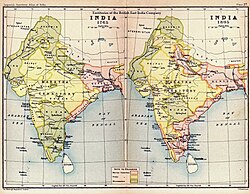
Following the defeat of the Vijayanagara Empire, the Qutb Shahi dynasty controlled most of present-day Andhra Pradesh and Telangana. This region later came under the rule of the Mughal Empire.54 Chin Qilich Khan, initially appointed as viceroy of the Deccan by the Mughal in 1713, established himself as a semi-independent ruler as the Nizam of Hyderabad.55 In 1765, British Lord Robert Clive obtained from the Mughal emperor Shah Alam II a grant of four circars (administrative districts) to the British East India Company, formalised in a 1778 treaty with Nizam Ali, the 5th Nizam of Hyderabad state, with addition of another circar. Four territories were ceded to the British by Nizam Ali in 1800, which eventually became the Rayalaseema region.56 Meanwhile, in present-day North Andhra, Raja Viziaram Raz (Vijaya Ramaraju) established a sovereign kingdom and acquired neighbouring estates with the British's support. After a subsequent dispute with the British, his kingdom was attacked and defeated at the Battle of Padmanabham in 1794. It was then annexed as a tributary estate, remaining so until it acceded to the Indian Union in 1949.57 Following the annexation of the Carnatic sultanate in 1801, the last major portion of present-day Andhra Pradesh came under British East India Company rule as part of Madras Presidency.58 After the Indian Rebellion of 1857, the region became part of the British crown until India gained independence in 1947.59

The anicut (barrage) at Dowleswaram, built in 1850 by Arthur Cotton60 and others at Vijayawada, Nellore, Sangam, Sunkesula, and Polampalli are examples of irrigation facilities constructed during the British Raj, which irrigated large areas across coastal districts.50 The Buckingham Canal, built between 1806 and 1878, ran parallel to the Coramandal Coast from Kakinada to Marakkanam in Tamil Nadu and served as a major water transportation route until the 1960s.61 Telegraph service, initiated in 1850, served for over 160 years till it was stopped on 15 July 2013, citing low patronage due to advances in mobile communications and short message service.62 Charles Philip Brown conducted pioneering work in bringing Telugu into the print era and introduced Vemana's poems to English readers.63 Kandukuri Veeresalingam is considered by scholars to be the father of the Telugu renaissance movement for his efforts to promote the education of women and lower-caste people, and for his opposition to Brahmin marriage customs such as child marriage, the bride price system, and the prohibition of widow remarriage.64

To achieve an independent state based on linguistic identity and to protect the interests of Telugu-speaking people in Madras State, Potti Sreeramulu fasted to death in 1952. The Telugu-speaking area of Andhra State was carved out of Madras state on 1 October 1953, with Kurnool as its capital city.65 Based on the Gentlemen's Agreement of 1956, the States reorganisation act created Andhra Pradesh by merging the neighbouring Telugu-speaking areas of the Hyderabad State with Hyderabad as the capital on November 1st, 1956.66
In the unified state, the Indian National Congress (INC) held a monopoly on governance until 1983. Thereafter, the Telugu Desam Party (TDP), led by N. T. Rama Rao (NTR), came to power as another major party. 67 The Nagarjuna Sagar Dam (commissioned in 1967) and the Srisailam hydro electric project (commissioned in 1982) are examples of irrigation and electricity projects from this period.6869 According to scholarly analysis, the increased presence of women, Dalits, and tribals in the social and political spheres, driven by social movements, was accompained by a rise in violence against these groups. Access to resources such as land remained an unachieved objective in effort to expand economic opportunities in the state.70 When the union cabinet decided to consider the formation of Telangana state in 2009 in response to the relaunched Telangana movement, the Samaikyandhra Movement opposing it emerged, leading to political turmoil in the state.71 The Andhra Pradesh reorganisation act was subsequently passed by the Parliament of India, authorizing the formation of Telangana state, despite opposition from the state legislature.72 The new state of Telangana came into existence on 2 June 2014 after approval from the president of India, with the residual state continuing as Andhra Pradesh.73
The TDP formed the first government of the residual state, with Chandrababu Naidu as chief minister.74 In 2017, the Government of Andhra Pradesh began operating from its new capital, Amaravati, for which 33,000 acres were acquired from farmers through a land pooling scheme.75 In the 2019 elections, Y. S. Jagan Mohan Reddy, leader of the YSR Congress Party, became chief minister, winning 151 out of 175 seats.76 His government introduced the 'village and ward volunteers' system,77 and reorganised the state into 26 districts.78 The government introduced English as the medium of instruction in almost all the state schools. A proposal to establish three capitals - with Amaravati as the legislative capital, Visakhapatnam(Vizag) as the executive capital, and Kurnool as the judicial capital - was struck down by the High Court. The government appealed the decision to the Supreme Court.7980
Geography
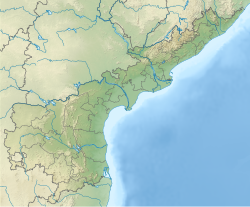
Andhra Pradesh is the seventh-largest state in India, with an area of 163,275 km2 (63,041 sq mi).81 The state shares borders with Orissa to the northeast, Chhattisgarh to the north, Karnataka to the southwest, Tamil Nadu to the south, Telangana to the northwest, and the Bay of Bengal to the east. Yanam district, an enclave of the Puducherry, is located within the state, bordering Kakinada district.82 Andhra Pradesh has a coastline of approximately 974 kilometres (605 mi), the second-longest coastline among Indian states.81
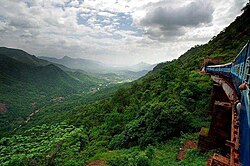
The Eastern Ghats form a major dividing line between the coastal plains and the peneplains in the state's geography. The ghats are discontinuous, and individual sections have local names. They become more pronounced toward the south and extreme north of the coast. These sections include the Horsley Hills, the Seshachala Hills, the Nallamala Hills, and the Papi Hills.838485 Arma Konda, located in Visakhapatnam district, is the highest peak in the state.8386 The peneplains, which are part of the Rayalaseema region, slope eastward.87 The Eastern Coastal Plains comprise the coastal districts, bordered by the Eastern Ghats along the Bay of Bengal, with variable width. These plains are predominantly delta regions formed by the Krishna, Godavari, and Penna rivers. The state has five soil types, with red lateritic and black soils constituting majority.88 Most of the coastal plains are used for intensive agriculture.89 The Kadapa basin, formed by two arching branches of the Eastern Ghats, is a mineral-rich area.90

The state's valleys include the Araku Valley, known for its biodiversity,91 and the Gandikota gorge. The Gandikota gorge is a canyon formed between the Erramala hill range, through which the Penna (Pennar) River flows.92 The state is home to the Borra Caves, created millions of years ago by water activity93 and the country's second-longest cave system, the Belum Caves are in the state.94 The state has several beaches in its coastal districts, such as Rushikonda, Mypadu, Suryalanka.95
Flora and fauna

The total forest cover of the state is 29,784.3 square kilometres (11,499.8 sq mi), constituting 18.28% of the total area.96 The Eastern Ghats region contains dense tropical forests, while vegetation becomes sparser as the ghats tradition to the peneplains, where shrub vegetation is more common. The vegetation in the state is predominantly dry deciduous, including teak, and genera such as Terminalia, Dalbergia, Pterocarpus, etc. The state has several rare and endemic plants species, Cycas beddomei, Pterocarpus santalinus, Terminalia pallida, Syzygium alternifolium, Shorea tumburgia etc.97
As of 2019, the state has three national parks and thirteen wildlife sanctuaries.97 Fauna include tigers, leopards, cheetals, sambars, sea turtles, and various birds and reptiles. The estuaries of the Godavari and Krishna rivers support mangrove forests, with fishing cats and otters as keystone species.98 Coringa Wildlife Sanctuary is an example of mangrove forests and salt-tolerant forest ecosystems near the sea, covering an area of 582 km2 (225 sq mi), approximately 9% of the state's forest area.99 Other protected areas include the Nagarjunsagar-Srisailam Tiger Reserve,100 Kolleru Bird Sanctuary,101 and Nelapattu Bird Sanctuary.102 Neem (Azadirachta indica) is the state tree, jasmine is the state flower, the rose ringed parakeet is the state bird, and blackbuck is the state mammal.7
Mineral resources

The state's varied geological formations contain industrial minerals and building stones. Major minerals found in significant quantities include beach sand, bauxite, limestone, granite, and diamonds. Minor minerals include barytes, calcite, and mica.103 The largest known uranium reserves in the country are located in Tummalapalli village of YSR district.104 The state also has reserves of oil and natural gas.105
Climate
The climate varies considerably by geographical region. Summers last from March to June. In the coastal plain, summer temperatures generally exceed 35 °C (95 °F), higher than in the rest of the state. The minimum summer temperature is approximately 20 °C (68 °F) in the far southwest. July to September is the season for tropical rains from the southwest monsoon. Winter lasts from October to February.106 Low-pressure systems and tropical cyclones form in the Bay of Bengal during the northeast monsoon from October to December, bringing rains to the southern and coastal regions of the state.107 Winter generally range from 30 to 35 °C (86 to 95 °F), except in the northeast, where the may fall below 15 °C (59 °F).106 Lambasingi in Alluri Sitharama Raju district is nicknamed the "Kashmir of Andhra Pradesh" because its temperature ranges from 0 to 10 °C (32 to 50 °F).108109 The average annual rainfall for the state is 966 mm (38.0 in).110
Demographics
According to the 2011 Census of India, the population of Andhra Pradesh is 49,577,103, with a density of 304/km2 (790/sq mi). The rural population accounts for 70.53%, of the total, and the urban population accounts for 29.47%.81 scheduled caste (SC) constitute17.08% of the population and scheduled tribe (ST) constitute 5.53% .112 Children aged 0–6 years number 5,222,384, or 10.6% of the total population.113 The state has a sex ratio of 997 females per 1000 males, higher than the national average of 926 per 1000. The literacy rate 67.35%. The former West Godavari district has the highest literacy rate of 74.32%, and the former Vizianagaram district has the lowest with 58.89%.81

The Human Development Index (HDI) of the state for the year 2022 is 0.673.114 As of 1 January 2023, there are 39,984,868 registered voters, including 3,924 third-gender voters. Kurnool district has the maximum number of voters at 1,942,233, while Alluri Sitharama Raju district has the smallest at 729,085.115
Telugu is the first official language, and Urdu is the second official language of the state.2 Telugu is the mother tongue of nearly 90% of the population.c111 Tamil, Kannada, and Odia are spoken in the border areas. Lambadi and several other languages are spoken by the scheduled tribes of the state.116 According to the Indian readership survey for the fourth quarter of 2019,19% of the population aged 12 years ando older can read understand English.117
Religion
- Hinduism (90.9%)
- Islam (7.30%)
- Christianity (1.38%)
- Jainism (0.05%)
- Others (0.37%)
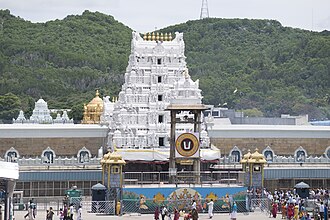
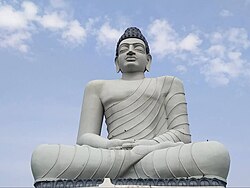
According to the 2011 census, the major religious groups in the state are Hindus (90.89%), Muslims (7.30%), and Christians (1.38%).119 Hindu pilgrimage destinations include the Tirumala Venkateswara temple at Tirupati, the Mallikarjuna temple at Srisailam, Kanaka Durga Temple at Vijayawada, and the Varaha Lakshmi Narasimha temple at Simhachalam.120 Buddhist sites at Amaravati and Nagarjuna Konda also attract visitors.121
Sub categorisaton
In Andhra Pradesh, there are 59 scheduled caste(SC) categories, 34 scheduled (ST) categories, and 104 Other Backward Classes (OBC) category.122123124 The Komati, Brahmin, Kamma, Kapu, Raju, Reddy, and Velama communities are classifed as forward castes.125126
Culture

Andhra Pradesh has 32 museums, featuring collections of ancient sculptures, paintings, idols, weapons, cutlery, inscriptions, and religious artefacts.127d The Amaravathi archaeological museum displays art traditions of Amaravathi and images of Buddha.128 The Bapu museum in Vijayawada contains historical galleries, stone inscriptions, coins, swords, body armour, shields, arms, and ornaments.129 Telugu Samskruthika Niketanam in Visakhapatnam displays historical artefacts of the pre-independence era.130 The Archaeological Survey of India has identified 135 centrally protected monuments in the state, including reconstructed monuments at Anupu and Nagarjunakonda.131 The state has 17 geographical indication (GI) registrations in the categories of agriculture, handicrafts, foodstuffs, and textiles under the Geographical indications of goods (Registration and Protection) act, 1999.132
Clothing
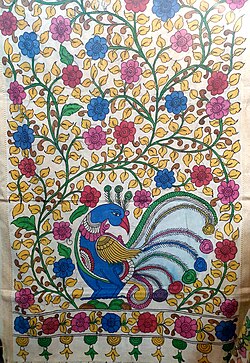
The men's traditional wear consists of Panche, a 4.5 metres (15 ft) long, white rectangular piece of non-stitched cloth often bordered in brightly coloured stripes.133 Women traditionally wear a sari, a garment that consists of a drape varying from 5 to 9 yards (4.6 to 8.2 m) in length and 2 to 4 feet (0.61 to 1.22 m) in breadth that is typically wrapped around the waist, with one end draped over the shoulder, baring the midriff, as according to Indian philosophy, the navel is considered as the source of life and creativity.134135 Women wear colourful silk saris on special occasions such as marriages.136 The traditional wear of young girls is a half-saree with blouse.137 The shift to wearing western clothing of pant and shirt has become common for boys and men, while women also wear salwar kameez in addition to saris.138 Dharmavaram textiles, Machilipatnam, and Srikalahasti Kalamkari handicrafts are few examples in clothes category with GI status.139132
Cuisine
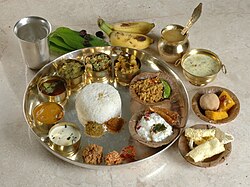
Andhra meals are combinations of spicy, tangy, and sweet flavours. The use of chillies, tamarind, and gongura (leaves of roselle) is common in Andhra food.140 Curry leaves are used copiously in most preparations of curries and chutneys. Various types of Pappu are made using lentils in combination with tomatoes, spinach, gongura, ridge gourd, etc. Apart from curries, pulusu, a stew made using tamarind juice in combination with vegetables, seafood, chicken, mutton, etc., is popular. Pachchadi, a paste usually made with a combination of groundnuts, fried vegetables, and chillies, is a must in a meal. Pickles made using mangoes, gooseberries, lemons, etc. are enjoyed in combination with Pappu. Buttermilk and yoghurt mixed with rice eaten towards the end of the meal soothe the body, especially after eating spicy food items earlier.141
A tamarind-rich dish popularly known as Pulihora is made with a thick sauce of tamarind, chillies, salt and asafoetida. It is tempered with mustard, curry leaves, peanuts and mixed with rice. It is offered even to the gods and then served as a prasadam (divine offering) in the temples to the devotees. Popular vegetarian curries include Dondakaya koora (ivy gourd cooked with coconut and green chilli) and Guttivankaya koora(stuffed brinjal curry). Thalakaya koora (lamb head gravy), Royyala koora (prawns cooked in tamarind), and Natukodi koora (freehold chicken curry with chillies) are popular non-vegetarian dishes across Guntur and surrounding regions. Yeta mamsam kobbari biryani (mutton cooked with coconut), Seema kodi (Rayalaseema-style chicken), Chennuru dum biryani, and Gongura mamsam (mutton cooked in sorrel gravy) are popular non-vegetarian dishes in Rayalaseema. Among fish preparations, Pulasa pulusu, thick aromatic and tangy gravy made from a single fish of the Godavari Pulasa variety is most desired in Konaseema. Ariselu, Burelu, Laddu, and Pootharekulu are some of the sweets made for special festivals and occasions. Pootharekulu, a preparation of sugar and rice flour and Taandri, a mango-flavoured sun-dried fruit jelly are popular sweets originating from Athreyapuram in Konaseema. Kakinada Khaaja layered flour deep fried and dipped in sugar is another popular sweetmeat.142 Bandar laddu, Tirupati Laddu are some of the food products with GI status.143132
Literature
Nannayya, Tikkana, and Yerrapragada form the trinity who translated the Sanskrit epic Mahabharata into Telugu during 11–14 centuries.144 Nannayya wrote the first treatise on Telugu grammar, called Andhra Shabda Chintamani in Sanskrit.145 Pothana translated Bhagavatam into Telugu.146 Vemana was an Indian philosopher who wrote Telugu poems using simple language and native idioms on a variety of subjects including yoga, wisdom, and morality.147 Potuluri Veerabrahmendhra swami, a clairvoyant and social reformer of 17th century, wrote Kalagnanam, a book of predictions.148149150
Telugu literature after Kandukuri Veeresalingam is termed Adhunika Telugu Sahityam (modern Telugu literature).151 He was the author of the first Telugu social novel Rajasekhara Charitram, published in 1880.152 The use of colloquial idiom rather than grandhik (classical) in literature, championed by Gurajada Apparao and Gidugu Ramamurthy Panthulu led to increased literacy.153 Various forms of literature such as poetry, novel, short story were vibrant as indicated by the responses to national and international developments in various spheres of human life.154 The modern Telugu poetry, which began around 1900 developed into three forms – Bhava kavitvam (lyrical poetry), Abhyudaya kavitvam (progressive poetry), and new experimental poetry, including Viplava kavitvam (revolutionary poetry). Gurajada Apparao, Rayaprolu Subbarao, Gurram Jashuva, Viswanatha Satyanarayana, Devulapalli Krishnasastri, and Sri Sri were some of the modern Telugu poets. Palagummi Padmaraju's short story Galivaana won second prize in World Short Story competition in 1952.155 Rachakonda Viswanadha Sastry initiated a new trend by focussing on the downtrodden in his novel Raju-Mahishi. Women writers such as Malati Chandur and Ranganayakamma dominated novels in the 1950s and 1960s. However, in the late 1970s, Yandamuri Veerendranath started writing popular novels with a focus on sex, suspense and violence, which were serialised in magazines.154 Viswanatha Satyanarayana was conferred the first Jnanpith Award for Telugu literature in 1970.156 Telugu film song as literature took shape in the 1930s. Some of the famous lyric writers include Samudrala Senior, Arudra, Athreya, Daasarathi, and C. Narayana Reddy.157
Architecture

Traditional temple architecture is influenced by Dravidian and Vijayanagara styles. In Dravidian architecture, for which Tirumala temple is an example, the temples consisted of porches or mantapas preceding the door leading to the sanctum, gate-pyramids or gopurams in quadrangular enclosures that surround the temple, and pillared halls used for many purposes. Besides these, the temple usually has a tank called the Kalyani or pushkarni.158 The gopuram is a monumental tower, usually ornate at the entrance of the temple forms a prominent feature.159 They are topped by the kalasam, a bulbous stone finial.160 Vimanam are similar structures built over the garbhagriha or inner sanctum of the temple but are usually smaller than the gopurams.161 In the Vijayanagar style for which Lepakshi Veerabhadra temple is an example, the main temple is laid out in three parts, these are: The assembly hall known as the mukha mantapa; arda mantapa or antarala (ante chamber); and the garbhagriha or the sanctum sanctorum.162 Sri Venkateswara institute of traditional sculpture and architecture, run by Tirumala Tirupati Devasthanams offers diploma courses.163164 Civic architecture which mainly featured courtyard structure to support joint family system and simple round houses is giving way to modern apartments.165
Arts
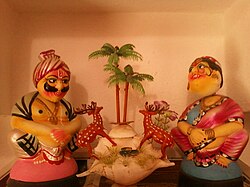

Kondapalli Toys, the soft limestone idol carvings of Durgi166 and Etikoppaka lacquered wooden toys are few handicrafts with GI status.167132 Kuchipudi, the cultural dance recognised as the official dance form of the state of Andhra Pradesh, originated in the village of Kuchipudi in Krishna district.168 Several renowned composers of Carnatic music like Annamacharya, Kshetrayya, Tyagaraja, and Bhadrachala Ramadas hailed from the state.169170 Sannai and Dolu are common musical instruments of marriages, household, and temple functions in the state.171 Harikathaa Kalakshepam (or Harikatha) involves the narration of a story, intermingled with various songs relating to the story.172 Burra katha is an oral storytelling technique in which the topic is either a Hindu mythological story or a contemporary social issue.173 Drama is an Indian theatre art form that is still popular.174 Gurajada Apparao wrote the play Kanyasulkam in spoken dialect for the first time. It was first presented in 1892.175 It is considered the greatest play in the Telugu language.176
The Telugu film industry (known as "Tollywood") is primarily based in Hyderabad, though several films are shot in Vizag, Tirupati, Rajamahendravaram. About 300 films are produced annually,177 C. Pullaiah is cited as the father of the Telugu cinema.178179 Film producer D. Ramanaidu holds a Guinness record for the most films produced by a person.180 Music composers and playback singers of the state include Ghantasala, S. P. Balasubrahmanyam, P. Susheela, S. Janaki, and P. B. Sreenivas.181 "Naatu Naatu" from the film RRR became the first song from an Asian film to win the Academy Award for Best Original Song in 2023.182183 Efforts are on to make Vizag as the hub of film industry by offering incentives.184
Festivals
Sankranti is the major harvest festival celebrated across the state.185 It is celebrated for four days in the second week of January. The first day of the Telugu new year Ugadi which occurs during March/April is also a special festival with the preparation and sharing of pickles (pachhadi) made from raw mangoes, neem flowers, pepper powder, jaggery and tamarind. Tasting this pickle which is a mix of different tastes teaches the importance of taking positive/negative life experiences in one's stride. Celebrations end with the recitation of the coming year's astrological predictions called Panchanga sravanam. Vijaya Dasami known commonly as Dussera and Deepavali, the festival of lights are other major Hindu festivals.186 Shivaratri is celebrated at Kotappakonda, with people from nearby villages preparing 80–100 ft height frames called prabhalu and taking it in a procession to the shine. Eid is celebrated with special prayers.187 Rottela Panduga is celebrated at Bara Shaheed Dargah in Nellore with participation across religious lines.188 Christians celebrate their religious festivals Good Friday, Easter and Christmas with processions and prayers.189190191
Government and administration


There are a total of 175 assembly constituencies in the state legislative assembly.192 The legislative council is the upper house with 58 members.193 In the Indian parliament, the state has 25 seats in the Lok Sabha and 11 seats in the Rajya Sabha.192 In accordance with the Constitution of India, the governor is a state's de jure head and appoints the chief minister who has the de facto executive authority.194195
Reddy, Kamma and Kapu communities cornered a share of 66% of seats in the 2019 election results. In the 2024 assembly elections, Reddy, Kamma and Kapu communities among the forward classes got more allocation than OBC in the unreserved category by major political parties or alliances.196 TDP-led National Democratic Alliance with Janasena Party and Bharatiya Janata Party emerged victorious defeating the incumbent YSRCP led by Jagan Mohan Reddy. It won 164 seats, while YSRCP got 11, a big drop from 151 it held. N. Chandrababu Naidu became the chief minister of the state for the fourth time.197 According to an opinion by Ayesha Minhaz in The Hindu daily, several factors including the prevailing anti-incumbency against the previous government and the alliance's promise of "Welfare with wealth generation" contributed to the success of TDP-led alliance.198
Andhra Pradesh police are structured in district, subdivision, circle, and police station hierarchy.199 In 2022, crimes against women and children saw a rise of 43.66% with a case count of 25,503 cases in Andhra Pradesh as per the National crime records bureau (NCRB) data. The state stood fifth in the country with 2,341 cybercrime cases.200 Andhra Pradesh High Court at Amaravati is headed by Chief justice with 37 judges. District judiciary is organised in a three-tier system with district courts at the top, civil (senior) and assistant sessions courts in the middle and civil (junior) and judicial first-class magistrate courts at the lower level. Apart from these, there are special courts such as family, CBI, ACB, Land reforms appellate tribunals, and industrial tribunals.201
Andhra Pradesh comprises two regions, namely Coastal Andhra and Rayalaseema from a historical perspective.202 The northern part of Coastal Andhra is sometimes mentioned separately as North Andhra, to raise voice against underdevelopment.203
Administrative divisions
The state is divided into 28 districts. These are further divided into 82 revenue divisions, and 688 mandals204205206207208 and 13,324 village panchayats as part of the administrative organisation.209 Each district is administered by a District Collector, who oversees land revenue administration, law and order, elections, and developmental activities. Revenue divisions are headed by Revenue Divisional Officers (RDOs), who may be Sub-Collectors (IAS officers) or Deputy Collectors. Mandals, the key sub-district units, consist of multiple villages and are managed by Mandal Revenue Officers (MROs), serving as the primary link between the district administration and village-level governance.
Local government
Local government in Andhra Pradesh functions through a three-tier Panchayati Raj system in rural areas and urban local bodies in towns and cities. Rural governance includes Gram Panchayats, Mandal Parishads, and Zilla Parishads, while urban areas are managed by Nagar Panchayats, Municipalities and Municipal Corporations. These bodies are responsible for local administration, development works, and delivery of basic services.
There are 17 municipal corporations, 77 municipalities, and 29 Nagar Panchayats for urban governance in Andhra Pradesh. Rural governance is managed by 13,234 Gram Panchayats at the village level, 676 Mandal Parishads at the mandal level, and 26 Zilla Parishads at the district level. Each of these bodies has elected councils and members.
Cities and towns
There are 123 urban local bodies, consisting of 17 municipal corporations, 79 municipalities, and 27 nagar panchayats, in the state. The urban population is 14.9 million (1.49 crores) as per the 2011 census.210 There are two cities with more than one million inhabitants, namely Visakhapatnam and Vijayawada.211
| City/Town | District(s) | Population (2011) |
|---|---|---|
| Visakhapatnam | Visakhapatnam, Anakapalli212 | 1,728,128 |
| Vijayawada | NTR | 1,476,931 |
| Guntur | Guntur | 743,354 |
| Nellore | Nellore | 558,548 |
| Kurnool | Kurnool | 484,327 |
| Rajahmundry | East Godavari | 476,873 |
| Tirupati | Tirupati | 461,900 |
| Kakinada | Kakinada | 443,028 |
| Kadapa | YSR Kadapa | 344,893 |
| Anantapur | Anantapur | 340,613 |
Government revenue and expenditure
For 2021–22, total receipts of the Andhra Pradesh government were ₹2.05 lakh crore (US$21 billion), inclusive of ₹53,284 crore (US$5.5 billion) of loans. States' tax revenue was ₹70,979 crore (US$7.4 billion). The top three sources of tax revenue are statedcrores goods and services tax (GST) (₹23,809 crore), sales tax/value added tax (VAT) (₹20,808 crores), and state excise (₹14,703 crores).213 The government earned a revenue of ₹7,345 crore from 2.574 million transactions for registration services. Visakhapatnam, Vijayawada, Guntur, and Tirupati are the top contributors to the revenue.214
The government's total expenditure was ₹1,91,594 crore, which includes debt repayment of ₹13,920 crore. The fiscal deficit was 2.1% of the GSDP. Outstanding debt was ₹3.89 lakh crore, an increase of almost ₹40,000 crore compared to the previous year. This accounts for 32.4 per cent of the GSDP, which is more than the usual limit of 25% as per the Fiscal Responsibility Budget Management Actthe and Budget Management ActActstated crores.215 The outstanding guarantee estimate was ₹1,38,875 crore, of which power sector accounts for ₹38,473 crore equal to 12% of GDP.213 Out of the audited total expenditure of ₹1,77,674 crore of the state in 2021–22, social services accounted for 42.65% and capital expenditure 9.21%. When compared to 2020–21, the capital expenditure decreased by 14 per cent. Of the total expenditure, major components of the social services breakdown are as follows. The social welfare category accounted for 16%, education, sport, arts and culture had a share of 15% and health and family welfare had a share of 6.3%. Comptroller and Auditor general in its 2023 report warned that the trend of increasing levels of revenue expenditure coupled with a low level of capital spend will adversely impact infrastructure development, development, aggregate demand, employment generation, and revenue generation in the long run.216
Economy
Gross state domestic product (GSDP/GDP) at current prices for the year 2022–23 is estimated at ₹1,317,728 crore (US$140 billion) (advanced estimates). The share of agriculture's contribution to the GSDP is at 36.19%, while industry is at 23.36%, and services are at 40.45%. The state posted a record growth of 7.02% at constant prices (2011–12) against the country's growth of 7%. GDP per capita is estimated at ₹219,518 (US$2,300). The sectoral growth rates at constant 2011–12 prices were for agriculture at 4.54%; industry at 5.66 and services at 10.05%.81217 Poverty rate is reduced to 4.2% in 2023 from 11.77% in 2015–16 as per Niti Ayog report. The methodology, based on the global multidimensional poverty index uses 10 indicators, covering three areas health, education, and standard of living and additionally maternal health and bank accounts.218 Unemployment rate of people with graduation in Andhra Pradesh is estimated at 24% as per periodic labour force survey of July 2022 to June 2023, the third highest in the country. The number for the whole of India is at 13.4%.219
According to the Economic Survey of India 2024–25, Andhra Pradesh was identified as the "leading performer" in the agriculture and allied sectors (excluding forestry and logging), recording a Compounded Annual Growth Rate (CAGR) of 8.80%. It was followed by Madhya Pradesh with 6.30% and Tamil Nadu with 4.80%. Andhra Pradesh also ranked 10th in Gross State Value Added (GSVA) in the services sector.220
Agriculture

The agricultural economy comprises agriculture, livestock, poultry farming, and fisheries.110 Four important rivers in India, the Godavari, Krishna, Penna, and Tungabhadra, flow through the state and provide irrigation.50 The population engaged in agriculture and related activities as per 2020–21 fiscal data is 62.17%.221 Rice is the state's major food crop and staple food.222 Besides rice, farmers grow jowar, bajra, maize, many varieties of pulses, sugarcane, cotton, tobacco, fruits, and vegetables.223 The state contributed to 30% of fish production of India and it had a share of 35% in total sea food exports of India in 2022–23.224 The state has three agricultural export zones: the undivided Chittoor district for mango pulp and vegetables, the undivided Krishna district for mangoes, and the undivided Guntur district for chillies.225 Banaganapalle mangoes produced in the state were accorded GI status in 2017.226132
Rythu Seva Kendras (RSK) or farmer facilitation centres are initiated by the government in 2020 to serve as a hassle-free, one-stop solution for the requirements of farmers from seed-to-sale.227228 Banking services through banking correspondent are also integrated. As of 2023, 10,778 RSKs are functioning.229 AP land titling act 2023 was brought in to change from presumptive land ownership system based on possession, registration or inheritance documents to conclusive land ownership system, with government standing as surety for the ownership. Lands in 6000 villages were surveyed with drones and land title certificates were issued to owners, with georeferencing of their land parcels. The benefits of the act include a reduction in land disputes and easier acquisition of lands for public requirements.230 The newly formed TDP led NDA alliance government decided to repeal the act citing the scope for misuse of authority and deviation from the centre's draft bill.231
The Commission on Inclusive and Sustainable Agricultural Development of Andhra Pradesh, chaired by Prof. R. Radhakrishna, estimated the number of tenant farmers at 24.25 lakh in 2014. This consists of 6.29 lakh landless tenants and the rest owning some land. Out of 60.73 lakh hectares under cultivation, 27.15 lakh hectares or 44% was cultivated by tenants. Departmental estimates for 2021 put the number of tenant farmers at about 16 lakh. To identify and serve the needs of tenants, the Crop Cultivator Rights Act (CCRA) of 2019 was brought out. Only 26% of tenants obtained the CCRA or loan eligibility cards as per 2022 data.232
Industries

As per the annual survey of industries 2019–20, the number of factories was 12,582 with 681,224 employees. The top four employment providers are food products (25.48%), non-metallic minerals (11.26%), textiles (9.35%), and pharmaceuticals (8.68%). Gross value added (GVA) contributed by the industrial sector is ₹55,035 crore (US$5.7 billion), of which food products (18.95%), pharmaceuticals (17.01%), and non-metallic minerals (16.25%) are the top three contributors. From a district perspective, the top three districts were Visakhapatnam, Tirupati and undivided Krishna.233
Andhra Pradesh hosts over 50 notified SEZs, spanning sectors like IT/ITES, pharmaceuticals, multi-product, biotechnology, and textiles, with a focus on export-oriented growth. Key operational examples include: Visakhapatnam Special Economic Zone, Sri City, Andhra Pradesh Special Economic Zone and several others.234235
The defence administered Hindustan Shipyard Limited built the first ship in India in 1948.236 The state has 36 big auto players, such as Ashok Leyland, Hero Motors, Isuzu Motors India, and Kia Motors,237 The mining sector contributed ₹3,390 crore (US$350 million) in revenue to the state during 2021–22.238 Nearly 225 million barrels of crude oil was produced from Ravva block, in the shallow offshore area of the Krishna Godavari basin during 1994–2011.239 The state accounted for 0.6% of had and codensate production, and 2.9% of natural gas production of India in 2020–21.240
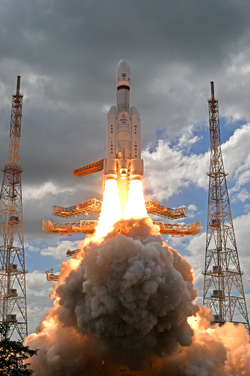
As of 20 June 2023, there are 190 science and technology organisations in Andhra Pradesh, including 12 central labs and research institutions.241 Satish Dhawan Space Centre (SDSC), known as Sriharikota range (SHAR), on the barrier island of Sriharikota in Tirupati district, is the primary satellite launching station operated by the Indian Space Research Organisation.242
Services
Trade, hotels & restaurants registered the highest growth rate of 16.64%, while public administration, the lowest growth rate of 4.24% for the year 2022–23 at constant 2011–12 prices among the services category.243 The state is ranked third in domestic tourist footfalls for the year 2021, with 93.2 million domestic tourists, which amounts to 13.8% of all domestic tourists in India. A major share of the tourists visit temples in Tirupati, Vijayawada, and Srisailam.244 The value of information technology exports from the state in 2021–22 was ₹926 crore (US$96 million), which is 0.14% of the IT exports from India. Exports have remained below 0.2% in the past five years.245
Infrastructure
Transport
Roads

As of 2023, the state has a total major road network of 47,244.83 km (29,356.58 mi). This comprises 8,163.72 km (5,072.70 mi) of national highways, 12,595.60 km (7,826.54 mi) of state highways, and 26,485.51 km (16,457.33 mi) of major district roads.246 In the category of national highways, NH 16, with a highway network of around 1,000 km (620 mi) in the state, is a part of the Golden Quadrilateral project. Vehicles on the register consist of 1.828 million transport vehicles and 13.7 million non-transport vehicles. In the transport category, goods carriages constitute 53.61%, auto rickshaws 36.21%, and stage carriages 1.14% constitute the top 3 categories. In the non-transport category, motorcycles constitute 89.5%, four-wheelers 7.29%, and cabs 5.96% occupy the top 3 ranks.247 The state government-owned Andhra Pradesh state road transport organisation is the public bus transport provider. It is split into 129 depots across four zones. It has a fleet strength of 11,098 buses and a staff count of 49,544. It operates 1.11 billion kilometres and serves 3.68 million passengers daily as per the socio-economic survey of 2023.248 As of 2023,
Railways
Renigunta was the first among major stations to appear on the railway map of Andhra Pradesh when Madras Railway connected it to Madras in 1862.249 Rajahmundry-Vizag and Vijayawada-Kovvur sections were opened in 1893. Vijayawada-Madras section was started in 1899. It was extended to Howrah in 1900.250 As of 2022, the state has a total broad-gauge route of 3,969 km (2,466 mi) with rail density of 24.36 km (15.14 mi) per 1,000 km2 (390 sq mi).251252 The railway network in Andhra Pradesh is under the South Central railway,253 East Coast railway,254 and South Western railway zones.255 During 2014–2022, 350 km (220 mi) of new lines were constructed at a rate of 44 km (27 mi) per year in Andhra Pradesh under the South Central railway division. The rate of construction was only 2 km (1.2 mi) per year in the preceding five years.256 The Nadikudi–Srikalahasti line with a length of 308.70 km (191.82 mi), which was sanctioned at a budget of ₹22.89 billion (US$240 million) in 2011–12 as a joint project of the centre and state, is progressing slowly, with only phase one of 46 km (29 mi) between New Piduguralla and Savalyapuram completed by 2021–22.257 There are three A1 and 23 A-category railway stations in the state, as per the assessment in 2017.258 Visakhapatnam was declared the cleanest railway station in the country, as per the assessment in 2018.259 The railway station in Shimiliguda is the second broad gauge railway station at high altitude in the country next to Qazigund in Jammu and Kashmir.260 A new railway zone South Coast railway (SCoR), with headquarters in Visakhapatnam, was announced in 2019, but is yet to be implemented.261262
Airports

Tirupati Airport was established in 1976.263 Visakhapatnam became a part of civil aviation in 1981.264 Daily flights to Vijayawada were started in 2003.265 Apart from these three which are international airports, the state has three domestic airports, namely Rajahmundry, Kadapa, and Kurnool.266 A privately owned airport for emergency flights and chartered flights is at Puttaparthi.267 Bhogapuram international airport is being constructed with a budget of ₹4,750 crore on an area of 2,300 acres near Visakhapatnam. It is expected to be completed by 2025.268 Andhra Pradesh saw a 60% increase in domestic air passenger traffic, with 24.74 lakh visitors at its five airports during the 2021–22 fiscal year (up to January 2022), compared to 15.48 lakh in the same period the previous fiscal year.269
Sea ports


The state has one major port at Visakhapatnam under the administrative control of the central government and 15 notified ports, including three captive ports, under the control of the state government.270 Visakhapatnam port was the earliest port to be commissioned in 1933.271 Gangavaram port is a deep seaport that can accommodate ocean liners up to 200,000–250,000 DWT.272 Cargo of 189.21 million tonnes was handled by Gangavaram, Kakinada deepwater, Krishnapatnam, Ravva, Kakinada anchorage, and Visakhapatnam during 2023–34, with a growth of 7.9% over the previous year.273 New sea ports are under construction at Ramayapatnam, Machilipatnam, Mulapeta, and Kakinada.274
Communication
As per socio-economic survey released in January 2023, Andhra Pradesh has 10,605 post offices.275 Bharat sanchar nigam limited (BSNL) operates 1,310 telephone exchanges with 20.6 million landline connections and also has 5.4 million wireless subscribers.276 Airtel, Jio, Vodaphone Idea, and BSNL provide mobile services in the state.277 As of 2023, the number of mobile phone users reached 82 million, while the number of internet subscribers reached 67.1 million in Andhra Pradesh. Mobile network services are available in 15,322 out of 17,328 villages. 5G network connectivity is provided by 16,714 base transfer stations.278 Several providers including state government owned Andhra Pradesh state fibre net limited operate wireline services supporting internet connectivity, telephony, and Internet Protocol television.277279 The AP statewide area network connects 2,164 offices of state administration at 668 locations down to the level of mandal headquarters.280 The network supports both data and video communications. BSNL and the National Knowledge Network multi-purposeCricket link district headquarters with state headquarters with a bandwidth of 34 Mbit/s. Mandal headquarters are connected with a bandwidth of 8 Mbit/s.281
Water
The state has 40 major and medium rivers and 40,000 minor irrigation sources. Godavari, Krishna, and Penna are major rivers. The total cultivable area is 19.904 million acres.282 Major, medium, and minor irrigation projects irrigate 10.172 million acres or 51.1% as of 2015.283 Several water projects in the state are facing issues. The Polavaram Project is a multi purpose terminal reservoir project located 42 km upstream of Davaleswaram barrage. It is a national project as per the AP Reorganisation Act of 2014. It has a reservoir capacity of 194.6 TMC and is expected to utilise 322.73 TMC of water in a year.284285 The under-construction project suffered setbacks with damage to its diaphragm wall during the 2022 floods.286 The Veligonda Project, taken up to serve needs of Prakasam, Nellore, and YSR Kadapa districts is progressing slowly.287 The Annamayya project, washed away in the 2021 floods, is set to be redesigned for 787 crores.288 Following the bifurcation, disputes with Telangana regarding the allocation of Krishna and Godavari waters continue to dog the state.289
Power

Thermal, hydel and renewable power plants supply power to the state. The installed capacity share of the state in the public sector generating stations was 7,245 MW. The private sector installed capacity was 9,370 MW, which includes an independent power producer capacity of 1,961 MW. The total installed capacity was 16,615 MW. Peak power demand for the state in 2021–22 was 12,032 MW and per capita consumption was 1,285 kilowatt hours. The energy consumed was 68,972 million units.290 Energy consumption increased from 54,555 MU in 2018–19 to 69,113 MU in 2023–24, at a growth rate of 4.8% which is among the lowest in the country. The per capita electricity consumption of AP. Increased by only 123 kWh in the same period when there was an increase of 146 kWh at the national level. The reasons were because of steep tariff increases and re-imposing power cuts as there was a delay in commissioning of the Polavaram hydro-electric power project (960 MW), Sri Damodaram Sanjeevaiah thermal power station (Krishnapatnam) stage-II unit-3 (800 MW) and Dr. Narla Tata Rao thermal power station stage-V unit-8 (800 MW) stations.291
Healthcare
The health infrastructure consists of 13 district hospitals, 28 sub-district hospitals, and 6,049 urban and rural health centres as of 2019–20. Doorstep healthcare support services are provided through 42,060 Accredited social health activist(ASHA) workers as of July 2019.292 The 108 service provides fast emergency management services by shifting patients to a nearby healthcare facility. The 104 service provides health care services at the doorstep of villages through mobile medical units that visit at least once a month.293 All the poor families are covered by the free state health insurance scheme up to a limit of ₹2,500,000 (US$26,000). The scheme serves 42.5 million people.294 The services are provided in government and private hospitals under the network. During 2014–2018, though the nominal mean claim amount of beneficiaries went up significantly, it decreased after accounting for inflation. Mortality rates have significantly decreased, which indicates better outcomes are being achieved at a lower cost.295 Out of 2,700 private hospitals registered under the state health insurance scheme, 540 (20%) are speciality hospitals. The number of patients treated under the state health insurance scheme increased from 1.2 million in 2022–23 to 1.39 million in 2023–24. whereas the budget remained constant at ₹3,350 crore.296 The National family health survey-5 conducted in 2019–21 data provided an insight into the economic and health status of households. Housing, electricity, clean fuel, access to toilets, mobile phone usage, and bank account access were available for more than 85% of households. Piped water facilities were available for only 22% of households. The state health insurance scheme, the employee health scheme, the Rashtriya swasthya bima yojana, the Employees' state insurance scheme, and the Central government health scheme covered 70% of households with at least one member covered.297
Banking
As of 31 March 2023, there are 33 private sector banks, 12 public sector banks, three rural banks, three small finance banks, three payment banks, one cooperative bank, and one state financial corporation operating in the state. The total number of branches is 7,881.298 As of September 2022, Banks have deposits amounting to ₹435,183.49 crore (US$45 billion) and extended credit amounting to ₹628,134.9 crore (US$65 billion), with credit deposit ratio of 144% against Reserve Bank of India norm of 60%. Primary sector advances amounted to 60.13% of total bank credit.275 Till March 2011, the microfinance industry flourished in united Andhra Pradesh with a share of 65% of pan India gross loans. Due to state regulation enacted in 2010, the loan portfolio shrank to 0.8% in Andhra Pradesh as of 31 March 2023. With the court deciding against state regulation, the industry is likely to pick up again.299
Education

Primary and secondary school education is imparted by government and private schools, regulated by the school education department of the state.300 The government decided to stop financial aid to aided schools with history dating to 1870s, forcing them to handover the schools with the aided staff to government or become private in 2021.301302 As per Unified district information system for education plus (UDISE+) report of 2021–22, there were a total of 8,244,647 students enrolled in 61,948 schools.303 Performance of rural students on reading, arithmetic skills in grades 1–8 declined during 2018–2022 partly attributed to Covid outbreak. As an example, for the reading assessment in Class VIII students, it nosedived 67% in 2022 from over 78% in 2018. However, the student enrolment at government schools improved from 63.2% to 71%.304 In the March 2024 secondary school certificate (SSC) exam 616,615 students appeared in the regular stream. Parvathipuram-Manyam district achieved the highest pass percentage of 96.37 among districts. The overall pass percentage was 86.69%, an increase of 14.43% over the previous year, with 100% in 2,803 schools.305306 In intermediate (higher secondary) examinations held in March 2024, 393,757 students appeared. The pass percentage was 78%, which is an increase of 7% over the previous year.307308
The state initiated education reforms in 2020 by creating six types of schools: satellite foundation schools (pre-primary), foundational schools (pre-primary – class II), foundational school plus (pre-primary – class V), pre-high school (class III – class VII/VIII), high school (class III – class X), and high school plus (class III – class XII).309 The transition to English-medium education in all government schools was started in the academic year 2020–2021. It is expected to reach completion by 2024–25. Affiliation of 1,000 government schools to the Central Board of Secondary Education in 2022–23 was done as an initial step.310 The state government went ahead with the English medium based on the parents survey despite protests and court cases.311 The state initiative is being funded in part by a loan from the World Bank to the tune of $250 million over 2021–2026 through the "Supporting Andhra's learning transformation" project to improve the learning outcomes of children up to class II level.312
As of 2023, there are 169 government-aided degree colleges and 55 private-aided degree colleges in the state. National assessment and accreditation council grades were awarded to 66 government colleges and 48 private-aided colleges. There are 85 government-aided and 175 private polytechnic colleges with a sanctioned strength of 75,906 students.313 In the category of technical education, there are 685 institutions offering diploma, undergraduate, and postgraduate Visakhapatnamthe courses, with an intake of 299,608.314 The AP state council of higher education organises various entrance tests for different streams and conducts counselling for admissions.315 The AP state skill development corporation is set up to support skill development and placement for the educated.316 As of 2021, there are a total of 36 universities: three central universities, 23 state public universities, six state private universities, and four deemed universities.317 Andhra University is the oldest of the universities in the state, established in 1926.318319 The government established Rajiv Gandhi university of knowledge technologies in 2008 to cater to the education needs of the rural youth of the state.320 NTR University of health sciences oversees medical education in 348 affiliated colleges spanning the entire range from traditional medicine to modern medicine.321 The public universities, including the legacy universities such as Andhra, Sri Venkateswara, and Nagarjuna, are suffering from a severe fund crunch and staff shortage, managing with only 20% of sanctioned full-time staff.322 KL University bagged the 50th rank, while Andhra university bagged the 76th rank in the overall category of India rankings for 2023 as per the national institute ranking framework of the union ministry of education in which 2,478 institutions, including 242 institutions from the state, participated.323 The gross enrolment ratio (GER) in higher education for the age group 18–23 for the state was at 35.2% for the year 2019–20, which comparing favourably with the GER for all of India at 27.1%. With a female GER of 35.3 and a male GER of 38.2, the Gender Parity Index was 0.84. The corresponding ratio for India was 1.01.324
There were 510 industrial training institutes (ITI) in 2020–21 in Andhra Pradesh, with 82 under government management and 417 under private management. The total available seats in 2021 were 93,280, out of which 48.90% were filled. In 2020, 10,053 students completed ITI.325 The state has 2,510 public libraries, including four regional libraries and 13 district central libraries under government management.326 Saraswata Niketanam at Vetapalem in Bapatla district, one of the oldest libraries established under private management in 1918, is losing its attraction as the Internet spreads.327 The government is planning to develop digital libraries at the village panchayat level.328
Media
The total number of registered newspapers and periodicals in the state for the years 2020–21 was 5,798. There were 1,645 dailies, 817 weeklies, 2,431 monthlies, and 623 fortnightlies. Telugu dailies number 787 with a circulation of 9,911,005, while English dailies account for 103 with a circulation of 1,646,453.329330 Eenadu, Sakshi, and Andhra Jyothi are the top three Telugu daily newspapers in terms of circulation in India and are also the top three Telugu news sites.331332 BBC Telugu news was launched on 2 October 2017.333334 Several privately owned news media outlets are considered biased towards specific political parties in the state.335336
There were 23 news channels, 10 general entertainment channels, two health channels, six religious channels, two other channels, and two cable distribution channels, for a total of 45 channels empanelled by the Andhra Pradesh information and public relations department.337 As of 2019, Akashvani previously known as All India Radio, operates 3 MW, 17 FM transmitters from 14 locations in the state. It reaches 99% of the area and 99.5% of the population. Akashvani's FM coverage alone reaches 36% of the area and 45% of the population.338 Five private operators run 13 FM stations, with Red FM operating from five locations.339
Sports

Traditional games played during childhood include Dagudu Mootalu (Hide and seek), Tokkudu Billa, Yedu Penkulata, Vamanaguntalu, Chadarangam (Chess), Puli Joodam, Ashta Chamma, Vaikuntapali (Snakes and ladders), Nalugu Stambalata, and Nalugu ralla aata.340 Karra samu (stick fight) is a traditional martial art form of the state. It is a form of self-defence to prevent thefts and robbery in villages. It is a discipline in the national sports, though it is not recognised for the sports quota category of reservations in Andhra Pradesh.341
Sports Authority of Andhra Pradesh is the governing body that looks after the infrastructure development, coaching, and administration of sports promotion schemes.342 Sports authority of India (SAI) operates three SAI Training centres in Andhra Pradesh as of 2022.343 Dr. YSR Sports School, Putlampalli, Kadapa district was selected for upgradation as Khelo India centre of excellence in 2021.344 Andhra Cricket Visakhapatnam District Association cricket Association (ACA-VDCA) stadium in Visakhapatnam is known for hosting international cricket matches.345
Pullela Gopichand is a former Indian badminton player. He won the All England Open Badminton Championships in 2001, becoming the second Indian to win after Prakash Padukone.346 P. V. Sindhu is one of India's most successful athletes, having won medals in major tournaments like the Olympics and the BWF circuit, including a gold at the 2019 World Championships. She is the first Indian to become a badminton world champion and only the second to win two consecutive Olympic medals.347 Karnam Malleswari is the first female Indian to win an Olympic medal. She won bronze medal in 69 kg weightlifting event at 2000 Olympics games.348 Srikanth Kidambi, a badminton player, is the first Indian to reach the world championships final in 2021 in the men's singles and win a silver medal.349 The state secured 16 medals at the 36th national games held in 2022. It was ranked 21st in the competition.350 The state sportpersons won 11 medals in Tennis, Archery, Badminton, Athletics, Chess and Cricket disciplines in the 19th Asian games held in China in 2022.351 The state was ranked at 13th spot in the sixth edition of Khelo India youth games-2023, by winning 27 medals.352
Notes
Notes
- Bifurcated by forming Telangana.
- ISO: Āndhra Pradēśa, pronounced [aːndʱɾə pɾədeʃᵊ] ⓘ, abbr. AP
- Based on 2011 census data, excluding districts and mandals which are part of Telangana
- Two entries are repeated
References
References
- Population Projections for India and States, 2011–2036. July 2020. Archived from the original on 13 March 2023. Retrieved 25 March 2023 – via ruralindiaonline.org.
- "Bill recognising Urdu as second official language passed". The Hindu. 23 March 2022. Retrieved 21 August 2024.
- Pavan (17 June 2022). "AP govt. issues orders recognising Urdu as the official language". The Hans India. Archived from the original on 27 July 2023. Retrieved 27 July 2023.
- "Andhra Pradesh Budget Analysis 2026-27". PRS Legislative Research. Retrieved 22 May 2026.
- "India: UNDP". Global Data Lab. Retrieved 16 October 2025.
- "Appendix-A: Detailed tables, Table (7): Literacy rate (in per cent) of persons of different age groups for each State/UT (persons, age-group (years): 7 & above, rural+urban (column 6))". Annual Report, Periodic Labour Force Survey (PLFS) (July 2023 – June 2024) (PDF). National Sample Survey Office, Ministry of Statistics and Programme Implementation, Government of India. 23 September 2024. pp. A-10.
- "Andhra Pradesh gets new state bird, state flower". Deccan Chronicle. 31 May 2018. Archived from the original on 1 June 2018. Retrieved 1 June 2018.
- Haug, Martin (1922). Aitareya Brahmana Of The Rigveda. p. 175.
- Shimada, Akira (2013). Early Buddhist architecture in context: the great stūpa at Amarāvatī (ca. 300 BCE–300 CE). Brill's Indological library. Lieden; Boston: Brill. ISBN 978-90-04-23283-9.
In the Aitareya Brahmaņa (VII, 18), the Andhras were mentioned together with the Pundras, Sabaras, Pulindas and Mūtibas as Dasyu (non-Aryan tribes) living on the borders of the land
- Bhandarkar, D. R. (1919). Lectures on the Ancient History of India on the period from 650 to 325 B.C. University of Calcutta, Calcutta. p. 14.
- Sen 1999, p. 172–176.
- A History of the Early Dynasties of AndhraDesa C. 200–625 A.D. : with a map of ancient Andhradesa and Daksinapatna. V. Ramaswami Sastrulu & sons (Madras). 1942 – via archive.org.
- "Tamil Literature Free Access". rmrl.in. RMRL Digital Library. Retrieved 16 February 2026.
- P., Sujatha Varma (30 September 2022). "Ancient stone tools found in Prakasam lead to startling revelations". The Hindu. Archived from the original on 21 July 2024. Retrieved 21 July 2024.
- IVNP, Prasad (17 November 2023). "Neolithic-age rock art, burial chambers discovered in Prakasam". The New Indian Express. Archived from the original on 21 July 2024. Retrieved 21 July 2024.
- V. D., Mahajan (2016). Ancient India. S. Chand Publishing. p. 297. ISBN 978-93-5253-132-5 – via Google Books.
- "History of Andhra Pradesh". aponline.gov.in. Government of Andhra Pradesh. Archived from the original on 16 July 2012. Retrieved 22 July 2012.
- Smith, Vincent A. (1902). "Andhra History and Coinage. I. The Andhra People or Nation, and the Early Andhrabhrtya Kings". Zeitschrift der Deutschen Morgenländischen Gesellschaft. 56 (4): 649–675. ISSN 0341-0137.
- Shimada, Akira (2012). Early Buddhist architecture in context: The great stupa at Amaravati (ca. 300 BCE – 300 CE). BRILL. pp. 33–40. ISBN 978-90-04-23283-9. Retrieved 14 October 2016.
- "Programmers Get Busy With Their New Juggling Act". Ananda Buddha Vihara. Archived from the original on 14 October 2007. Retrieved 29 April 2024.
- Champahalakshmi, R. "A magnum opus on Tamil-Brahmi inscriptions". Frontline. The Hindu. Archived from the original on 30 December 2013. Retrieved 7 October 2011.
- Alla, Chakradhar (1 June 2022). "Impact of writing tools in the evolution of Telugu script". In Chakrabarti, Debkumar (ed.). Ergonomics for design and innovation. Lecture Notes in Networks and Systems. Vol. 391. Springer. p. 331. doi:10.1007/978-3-030-94277-9_29. ISBN 978-3-030-94276-2. Archived from the original on 13 May 2023. Retrieved 29 July 2024.
- Higham, Charles (2009). Encyclopedia of ancient Asian civilizations. Infobase Publishing. p. 299. ISBN 978-1-4381-0996-1. Retrieved 6 March 2016.
- Dutt, Sukumar (1988). Buddhist monks and monasteries of India: Their history and their contribution to Indian culture. Motilal Banarsidass. p. 132. ISBN 978-81-20-80498-2. Retrieved 29 April 2024.
- "History of Amaravati" (PDF). crda.ap.gov.in. Government of Andrha Pradesh. Archived (PDF) from the original on 19 May 2024. Retrieved 29 July 2024.
- Wolpert, Stanley A. (1989). A new history of India. Oxford University Press. pp. 75, 76. ISBN 978-0-19-505636-5 – via Google Books.
Amaravati on the banks of the Krishna, which was later the southeast capital of the Satavahanas, flourished in its trade with Rome, Ceylon, and Southeast Asia, and may well have been the most prosperous city of India during the second century of the Christian era.
- Knipe, David M. (2015). Vedic voices: Intimate narratives of a living Andhra tradition. Oxford University Press. pp. 8–9. ISBN 978-0-19-026673-8. Retrieved 24 July 2024.
- Padma, Sree; Barber, Anthony W. (2008). Buddhism in the Krishna river valley of Andhra. SUNY Press. p. 2.
- Davidson, Ronald (2005). Tibetan renaissance. Columbia. p. 29.
- Warder, Anthony Kennedy (2004). Indian Buddhism. Motilal Banarsidass. pp. 336, 355, 402, 464. ISBN 978-81-208-1741-8.
Those of us who have studied the evidence above will prefer to locate this source of most of the Mahāyāna sutras in Andhra. (p. 355) From the internal evidence, it appears that this sutra was written in South India, very likely in Andhra, in which case the country of origin of the Mahāyāna continued in the lead in the development of new ideas in India. (p. 402)
- Johnson, Todd M.; Grim, Brian J. (2013). The world's religions in figures: An introduction to international religious demography (PDF). Hoboken, New Jersey: Wiley-Blackwell. p. 36. Archived from the original (PDF) on 20 October 2013. Retrieved 2 September 2013.
- Rowland 1967, p. 210.
- Subramanian, K. R. (1989). Buddhist remains in Andhra and the history of Andhra between 225 and 610 A.D. Asian Educational Services. ISBN 978-81-20-60444-5. Retrieved 29 April 2024 – via Google Books.
- Sen 1999, p. 433.
- "History – Kadapa district". Kadapa district. Retrieved 25 August 2024.
- రెడ్డి, తులసీ ప్రసాద్ (22 February 2022). "కడప జిల్లాలోని కలమల్ల శాసనమే తొలి తెలుగు శాసనమా?" (in Telugu). BBC News తెలుగు. Archived from the original on 6 April 2023. Retrieved 5 April 2023.
- Sarma, A. Rajeswara (2009). "Indrapura: The capital city of Vishnukundi dynasty". Proceedings of the Indian History Congress. 70: 138–141. ISSN 2249-1937. JSTOR 44147663. Retrieved 29 April 2024.
- "Welcome to Guntur district official website". Archived from the original on 27 June 2016. Retrieved 31 May 2016.
- "About Eastern Chalukyas – Official AP state government portal – AP state portal". Archived from the original on 17 June 2016. Retrieved 27 May 2016.
- Pollock, Sheldon, ed. (19 May 2003). Literary cultures in history: Reconstructions from South Asia. University of California Press. pp. 393, 397. ISBN 978-0-520-22821-4. Retrieved 1 June 2023 – via Google Books.
- Mamidi, Harikrishna (19 October 2023). "Rise and fall of Kakatiyas, turning point in Indian history". Telangana Today. Archived from the original on 19 October 2023. Retrieved 30 October 2023.
- Kulke, Hermann; Rothermund, Dietmar (2004). A History of India. Psychology Press. p. 181. ISBN 9780415329200.
The Bahmani sultanate of the Deccan: Soon after Muhammad Tughluq left Daulatabad, the city was conquered by Zafar Khan, a Turkish or Afghan officer of unknown descent, had earlier participated in a mutiny of troops in Gujarat.
- Wink, André (2020). The making of the Indo-Islamic world C.700–1800 CE. Cambridge University Press. p. 87. ISBN 9781108417747.
Finally, and more importantly, the independent Bahmani dynasty of the Deccan was founded in 1348 by Zafar Khan, probably an Afghan who broke away from Delhi with the support of Afghan and Mongol "New Muslims"
- Talbot, Cynthia (2001). Pre-colonial India in practice: Society, region, and identity in medieval Andhra. Oxford University Press. p. 177. ISBN 978-0-19803-123-9 – via Google Books.
- "Imperial gazetteer of India, v. 15 1931". Kondaveedu. Digital South Asia Library. p. 393. Archived from the original on 13 June 2010. Retrieved 20 October 2009.
- "Kondavid-durg near Guntur. 19 February 1804. Signed 'W.R.'". British on line Gallery. Archived from the original on 18 October 2012. Retrieved 20 October 2009.
- Durga Prasad, J. (1988). History of the Andhras up to 1565 A. D. (PDF). Guntur: P.G. Publisher. pp. 231–235. Archived from the original (PDF) on 22 April 2006. Retrieved 27 January 2007.
- Stein, Burton (1989). The new Cambridge history of India: Vijayanagara. Cambridge University Press. p. 88. ISBN 978-0-521-26693-2. Retrieved 29 April 2024 – via Google Books.
Controlling numerous villages and many large towns, these powerful chiefs commanded large mercenary armies that were the vanguard of Vijayanagara forces during the sixteenth century.
- Ramaswamy, Vijaya (2014). "Mapping migrations of South Indian weavers before, during and after the Vijayanagara Period: Thirteenth and eighteenth centuries". In Lucassen, Jan; Lucassen, Leo (eds.). Globalising Migration History: The Eurasian Experience (16th–21st Centuries). BRILL. p. 99. ISBN 978-90-04-27136-4 – via Google Books.
- "Water resources department – History". Water resources department. Archived from the original on 30 May 2023. Retrieved 30 May 2023.
- Saletore, B. A. (1930). Social and political life in the Vijayanagara Empire. Vol. II. Retrieved 29 April 2024.
- "Lepakshi Nandi, Veerabhadra temple on UNESCO world heritage tentative list". The Hindu. 29 March 2022. Archived from the original on 1 December 2022. Retrieved 30 May 2023.
- "Sri Veerabhadra Temple and Monolithic Bull (Nandi), Lepakshi". UNESCO. Archived from the original on 17 May 2022. Retrieved 22 July 2024.
- Richards, J. F. (1975). "The Hyderabad Karnatik, 1687–1707". Modern Asian Studies. 9 (2): 241–260. doi:10.1017/S0026749X00004996. ISSN 0026-749X. S2CID 142989123.
- Faruqui, At Empire's End 2013, pp. 9–13.
- T., Bhujang Rao (1940). "The ceded districts, the circars, and the Nizam". Triveni Journal. Retrieved 20 August 2024.
- "Imperial gazetteer of India v. 24". pp. 339–341. Archived from the original on 4 June 2023. Retrieved 31 May 2023.
- K., Rajayyan (1970). "British annexation of the Carnatic, 1801". Proceedings of the Indian History Congress. 32 (2): 54–62. JSTOR 44138505. Retrieved 18 July 2024.
- Regani, Sarojini (1988). Nizam-British relations, 1724–1857. Concept Publishing. pp. 130–150. ISBN 978-81-7022-195-1.
- Hope, Elizabeth (2009) [1st pub. 1900]. General Sir Arthur Cotton, R. E., K. C. S. I.: His life and work. London: Hodder and Stoughton. p. 120. ISBN 978-1444629965. Retrieved 26 December 2018.
dowleswaram.
- K., Venkateshwarlu (5 August 2017). "An ambitious plan to revive the Buckingham Canal". The Hindu. Retrieved 24 August 2024.
- "Telegram is dead". The Hindu. 15 July 2013. Retrieved 24 August 2024.
- Schmitthenner, Peter L. (2001). Telugu resurgence: C.P. Brown and cultural consolidation in nineteenth-century South India. Manohar. p. 94. ISBN 978-81-7304-291-1.
- Leonard, John (1992). "Viresalingam and the idea of Social change in Andhra". In Jones, Kenneth W. (ed.). Religious controversy in British India (PDF). SUNY Press. Archived (PDF) from the original on 6 August 2024. Retrieved 6 August 2024.
- "Struggle for Andhra state – AP state portal". Archived from the original on 15 June 2020. Retrieved 20 July 2020.
- "Post-independence era, then and now". aponline.gov.in. Archived from the original on 20 December 2013. Retrieved 3 August 2013.
- "N.T. Rama Rao: A timeline". The Hindu. 28 May 2017. Archived from the original on 1 June 2023. Retrieved 1 June 2023.
- "Nagarjuna Sagar Dam". Water resources department. Archived from the original on 16 April 2024. Retrieved 18 July 2024.
- V., Raghavendra (6 August 2023). "AP-Genco plans capital overhaul of Srisailam right bank powerhouse in phases". The Hindu. Archived from the original on 9 August 2024. Retrieved 19 July 2024.
- Human development report 2007 – Andhra Pradesh (PDF). Hyderabad: Government of Andhra Pradesh. 2008. pp. 19–32. Retrieved 25 August 2024.
- "Hyderabad on the edge; APNGOs meet today". The Hindu. 7 September 2013. Retrieved 19 August 2024.
- Narayan, Jayaprakash (28 October 2013). "A challenge to Indian federalism". The Hindu. Archived from the original on 20 June 2023. Retrieved 20 June 2023.
- "Telangana state formation gazette". The New Indian Express. Archived from the original on 6 July 2014. Retrieved 14 May 2014.
- "Naidu takes oath as Andhra Pradesh CM". The Hindu. 8 June 2014. Archived from the original on 10 June 2014. Retrieved 6 August 2024.
- P, Ashish (2 March 2017). "Chief Minister Chandrababu Naidu inaugurates new Andhra Pradesh assembly". India Today. Archived from the original on 14 April 2021. Retrieved 9 March 2021.
- "Jagan Mohan Reddy sworn in as Andhra Pradesh CM". The Hindu. 30 May 2019. Retrieved 19 August 2024.
- "Jagan rolls out grama and ward volunteer system". The Hindu. 15 August 2019. Archived from the original on 15 July 2024. Retrieved 15 July 2024.
- V., Raghavendra (4 April 2022). "Jagan launches 13 new districts of Andhra Pradesh". The Hindu. Retrieved 21 August 2024.
- "Supreme Court to examine if A.P. can insist on compulsory English medium education". The Hindu. 3 September 2020. Archived from the original on 3 September 2020. Retrieved 15 July 2024.
- V, Raghavendra (12 July 2023). "Three capitals case: Supreme Court adjourns hearing of SLP filed by A.P. govt. to December". The Hindu. Archived from the original on 13 July 2023. Retrieved 15 July 2024.
- DOP 2023, p. 3.
- "Political map of India 1:4000000 (10th edition)". Survey of India. 1 January 2020. Archived from the original on 10 April 2023. Retrieved 16 June 2023.
- Kohli, M.S. (2014) [2010]. Mountains of India: Tourism, Adventure and Pilgrimage. Indus Publishing. pp. 36–. ISBN 978-81-7387-135-1. Retrieved 4 July 2013 – via Google Books.
- "7 offbeat hill stations in Andhra Pradesh that are worth exploring this season". Goindigo. 3 January 2023. Archived from the original on 9 August 2024. Retrieved 29 April 2024.
- G., Sudhakar (2012). "18 Seshachalam biosphere reserve". In Palni, Lok Man Singh; Rawal, Ranbeer S; Rai, Rama K; S., Venkata Reddy (eds.). Compendium on Indian biosphere reserves: Progression during two decades of conservation (PDF). Ministry of environment and forests, Government of India. pp. 178–183. Retrieved 19 August 2024.
- "Arma Konda, India". peakbagger. Archived from the original on 5 January 2023. Retrieved 17 June 2023.
- DES 2021, p. 107.
- "Natural forming – Andhra Pradesh". Niti Ayog. Retrieved 11 August 2024.
- D, Kumara Charyulu; D., Moses Shyam; S.P., Wani; KV, Raju KV. "Rythu Kosam: Andhra Pradesh primary sector mission Coastal Andhra region baseline summary report, Research report IDC-13" (PDF). ICRISAT. Retrieved 20 August 2024.
- "Kadapa or Cuddapah basin". Directorate General of Hydrocarbons. Archived from the original on 26 April 2023. Retrieved 2 June 2023.
- Visakhapatnam hub (PDF). Vijayawada: Andhra Pradesh tourism authority. pp. 3–4. Retrieved 19 August 2024.
- "Gandikota: The stunning Indian gorge that resembles the Grand Canyon". BBC. 5 January 2022. Retrieved 19 August 2024.
- Bhattacharjee, Sumit. "Natural world heritage status for Borra Caves sought". The Hindu. Archived from the original on 16 January 2017. Retrieved 13 May 2017.
- "Film tourism to boost Kurnool economy". Deccan Chronicle. 3 February 2017. Archived from the original on 13 March 2017. Retrieved 13 May 2017.
- The charming beaches of Andhra Pradesh (PDF). AP tourism authority. Archived from the original (PDF) on 12 July 2022. Retrieved 12 July 2022.
- Chapter 13: Forests and tree resources in states and union territories (PDF). 2021. pp. 257–264. Archived (PDF) from the original on 2 June 2023. Retrieved 2 June 2023.
- India state of forest report 2019, Vol II (PDF). Forest Survey of India. 2019. pp. 2–12. Retrieved 22 August 2024.
- "About-us". AP Forest Department. Archived from the original on 5 June 2024. Retrieved 6 June 2024.
- "Coringa sanctuary". East godavari district, Government of AP. Archived from the original on 2 June 2023. Retrieved 2 June 2023.
- "Facts & Figures of NagarjunaSagar Srisailam Tiger Reserve Atmakur Andhra Pradesh". Archived from the original on 2 February 2014. Retrieved 26 January 2014.
- "The list of wetlands of international importance" (PDF). The Ramsar convention on wetlands. The Secretariat of the Convention on Wetlands (Ramsar, Iran, 1971). p. 20. Archived from the original (PDF) on 30 May 2012. Retrieved 5 June 2014.
- G., Ravikiran (7 November 2017). "Rain brings back winged visitors". The Hindu. Retrieved 22 August 2024.
- "Mineral reserves". Mines, Government of Andhra Pradesh. Archived from the original on 7 December 2022. Retrieved 29 April 2024.
- "India: 'Massive' uranium find in Andhra Pradesh". New Delhi: BBC World News. 19 July 2011. Archived from the original on 19 July 2011. Retrieved 19 July 2011.
- MOPNG 2023.
- Britannica (23 April 2024). "Andhra Pradesh". Encyclopædia Britannica. Archived from the original on 29 April 2024. Retrieved 29 April 2024.
- M, Rajeevan (2022). IMD Meteorological Monograph: Northeast Monsoon of South Asia (PDF). Indian Meteriological department. pp. 5–7. Archived (PDF) from the original on 9 August 2024. Retrieved 7 August 2024.
- Ganguly, Nivedita (17 September 2014). "Lambasingi set to become tourist hotspot". The Hindu. Visakhapatnam. Archived from the original on 3 September 2015. Retrieved 26 November 2014.
- "Lambasingi records 2º c". Deccan Chronicle. Visakhapatnam. 16 December 2013. Archived from the original on 13 July 2015. Retrieved 26 November 2014.
- DES 2021, p. 31.
- "Table C-16 Population by mother tongue: Andhra Pradesh". Registrar General and Census Commissioner of India. Archived from the original on 12 November 2022. Retrieved 4 January 2023.
- DOP 2023, p. 16.
- Population in different age group – Census 2011 (PDF). MHRD. p. 3. Archived (PDF) from the original on 10 October 2022. Retrieved 28 May 2023.
- "Sub-national HDI – area database". Global Data Lab. Institute for Management Research, Radboud University. Retrieved 16 November 2024.
- "A.P. has 3,99,84,868 voters, women outnumber men". The Hindu. 5 January 2023. Archived from the original on 28 May 2023. Retrieved 28 May 2023.
- "Report of the commissioner for linguistic minorities: 47th report (July 2008 to June 2010)" (PDF). Commissioner for Linguistic Minorities, Ministry of Minority Affairs, Government of India. pp. 122–126. Archived from the original (PDF) on 13 May 2012. Retrieved 16 February 2012.
- Indian readership survey 2019 Q4 (PDF). IRS. 2020. p. 20. Archived (PDF) from the original on 25 September 2020. Retrieved 27 May 2023.
- "Census of India – Religious Composition". Government of India, Ministry of Home Affairs. Archived from the original on 13 September 2015. Retrieved 27 August 2015.
- "Population by religion – Andhra Pradesh". Registrar General and Census Commissioner of India. 2011. Archived from the original on 28 May 2022. Retrieved 4 January 2023.
- APTDC 2018.
- APTDC 2019, p. 18–25.
- "SC list – Andhra Pradesh". Department of Social Justice and Empowement. Retrieved 25 August 2024.
- "ST list" (PDF). Ministry of Tribal Affairs. Retrieved 25 August 2024.
- "State/UT-wise Number of Entries in the Central List of OBCs (as on 12.04.2018". Department of Social Justice and Empowerment. 12 April 2018. Retrieved 25 August 2024.
- "Andhra Pradesh Chief Minister to release second tranche of YSR EBC Nestham on April 12". The Hindu. 11 April 2023. Retrieved 25 August 2024.
- "Andhra Pradesh Chief Minister releases ₹536.77 crore aid for women under Kapu Nestham scheme in A.P." The Hindu. 16 September 2023. Retrieved 25 August 2024.
- Seth & Sadiya 2023.
- "Archaeological museum, Amaravati – Archaeological Survey of India". Asi.nic.in. Archived from the original on 29 September 2011. Retrieved 19 August 2010.
- Tourist Guide to Andhra Pradesh. Sura Books. p. 36. ISBN 978-81-747-8176-5. Retrieved 24 January 2016 – via Google Books.
- Seth & Sadiya 2023, p. 18, 1.19.
- "Alphabetical list of monuments – Andhra Pradesh". Archaeological Survey of India. Archived from the original on 30 November 2022. Retrieved 24 May 2023.
- Annual report 2021-22 Intellectual property India (PDF). The Office of the controller general of patents, designs and geographical indications, Government of India. 2022. p. 76. Archived (PDF) from the original on 30 May 2023. Retrieved 30 May 2023.
- "Indian Dhoti". Indian Mirror. Archived from the original on 29 July 2020. Retrieved 3 January 2021.
- Boulanger, Chantal (1997). Saris: An Illustrated Guide to the Indian Art of Draping. New York: Shakti Press International. ISBN 978-0-966-14961-6.
- Lynton, Linda (1995). The Sari. New York: Harry N. Abrams, Incorporated. ISBN 978-0-810-94461-9.
- C. Monahan, Susanne; Andrew Mirola, William; O. Emerson, Michael (2001). Sociology of Religion. Prentice Hall. p. 83. ISBN 978-0-130-25380-4.
- "'Lehnaga choli' back in vogue in Bengaluru this Diwali". Onmanorama. 13 November 2020. Retrieved 22 August 2024.
- "India - Clothing, Textiles, Draping | Britannica". Encyclopedia Britannica. Archived from the original on 9 April 2026. Retrieved 30 May 2026.
- "Kalamkari: Craft of the matter". mid-day. 24 August 2015. Archived from the original on 31 January 2016. Retrieved 26 January 2016.
- APTDC 2019, p. 54–63.
- "Andhra cuisine: A symphony of spices". Indianculture.gov.in. Archived from the original on 29 May 2023. Retrieved 29 May 2023.
- APTDC 2019, p. 60-62.
- Naidu, T. Appala. "Bandar laddu gets GI tag". The Hindu. Archived from the original on 12 November 2020. Retrieved 13 May 2017.
- Pandippedi & Mantripragada 1928, pp. 42–49.
- Gopavaram, Padmapriya; Subrahmanyam, Korada (2011). "1". A comparative study of Andhrasabdachintamani and Balavyakaranam. Hyderabad: University of Hyderabad.
- Pandippedi & Mantripragada 1928, p. 64.
- Pandippedi & Mantripragada 1928, p. 99.
- Shaw, Padmaja (5 November 2019). "Celebrated Professor harassed for identifying 17th-century social reformer as 'Sudra'". The Wire. Archived from the original on 9 August 2024. Retrieved 29 April 2024.
- Proceedings of the Andhra Pradesh oriental conference, first session, Andhra Saraswathi Parishat, Hyderabad, May 1977. The Conference. 1979. p. 131. Retrieved 2 June 2023 – via Google Books.
Kalagnana is a special type of discipline very popular in Andhra Desa because of the famous Kalagnanam of Sri Potuluri Veerabrahmendhra swami written in Telugu. It forecasts many incidents which are proved to be correct by the posterity.
- Malik, Yogendra K. (1981). South Asian intellectuals and social change: A study of the role of vernacular-speaking intelligentsia. Heritage. p. 314. ISBN 978-08-364-0825-6. Retrieved 29 April 2024.
A later poet similar to Vemana was Potuluri Veerabrahmendhra swami, popularly known as Brahmamgaru
- D. 1976, p. 80.
- D. 1976, p. 88.
- GK, Subbarayudu; C, Vijayasree (1996). "Twentieth-century Telugu literature". In Nalini Natarajan (ed.). Handbook of twentieth-century literatures of India. Greenwoord press. Archived from the original on 14 January 2021. Retrieved 30 May 2023.
- Dasari, Amarendra (1 March 1995). "Telugu Literature Today". Indian Literature. 38 (2): 159–163. JSTOR 23335697. Retrieved 18 July 2024.
- D., Anjaneyulu (1 September 1983). "Palagummi Padmaraju—Sensitive Telugu Writer". Indian Literature. 26 (5): 22–26. JSTOR 23331331.
- "Jnanpith laureates official listings". Jnanpith Website. Archived from the original on 13 October 2007. Retrieved 7 November 2008.
- A.D., Rangarajan (10 January 2020). "C Narayana Reddi: Changing contours of Telugu film lyrics". The Hindu. Archived from the original on 7 May 2024. Retrieved 7 May 2024.
- Fergusson, James (1997) [1910]. History of Indian and Eastern Architecture (3rd ed.). New Delhi: Low Price Publications. p. 309.
- Ching, Francis D.K.; et al. (2007). A Global History of Architecture. New York: John Wiley and Sons. p. 762. ISBN 978-0-471-26892-5.
- Ching, Francis D.K. (1995). A Visual Dictionary of Architecture. New York: John Wiley and Sons. p. 253. ISBN 978-0-471-28451-2.
- Balasubrahmanyam, S.R. (1975). Middle Chola Temples. Thomson Press. pp. 16–29. ISBN 978-9-060-23607-9.
- Bhardwaj 1998, p. 295.
- A.D., Rangarajan (1 March 2022). "Ornate sculptures delight visitors at SVITSA expo". The Hindu. Retrieved 11 August 2024.
- T., Sudhakar (5 October 2014). "Institute of traditional sculpture, ancient architecture at Tirupati". The New Indian Express. Retrieved 22 August 2024.
- "The 'manduva logili' homes of Andhra Pradesh". The Hindu. 17 September 2017. Retrieved 11 August 2024.
- "Durgi stone craft". Cesdeva. Archived from the original on 4 December 2013. Retrieved 20 December 2013.
- "Lacquer ware toys". Lepakshi handicrafts. Archived from the original on 30 May 2023. Retrieved 30 May 2023.
- Devi 1990, p. 67.
- Kuppuswami, Gowri; Hariharan, M. (1982). Bhajana tradition in South India. New Delhi: Sangeet Natak Academy.
- Devi 1990, p. 75.
- D., Surendra Kumar (11 September 2022). "22-year-old keeps her father's legacy alive through Sannai". The New Indian Express. Retrieved 11 August 2024.
- Donappa, Thoomati. Telugu harikatha sarvasvam. OCLC 13505520.
- "Burrakatha". The Andhra Pradesh Shilparamam Arts, Crafts & Cultural Society. Retrieved 19 August 2024.
- "'Nandi Natakotsavam' begins with exciting plays in Andhra Pradesh". The New Indian Express. 24 December 2023. Archived from the original on 9 August 2024. Retrieved 8 May 2024.
- Gurujada, Venkata Apparao (2007). Girls for Sale: A Play from Colonial India. Translated by Velcheru, Narayana Rao. Indiana University Press. ISBN 978-0-253-34899-9. Retrieved 21 August 2024 – via Google Books.
- Gudipoodi, Srihari (27 September 2012). "Remembering the immortal satirist". The Hindu. Archived from the original on 17 August 2021. Retrieved 16 June 2022.
- Reddem, Appaji (5 March 2022). "Is Telugu cinema set for a change of scene?". The Hindu. Archived from the original on 23 June 2023. Retrieved 23 June 2023.
- M. L., Narasimham (7 November 2010). "Sati Savithri (1933)". The Hindu. Archived from the original on 13 November 2010. Retrieved 8 July 2011.
- Garg, Bhagwan Das (1996). So many cinemas: the motion picture in India. Eminence Designs. p. 86. ISBN 978-81-900602-1-9. Retrieved 17 February 2017 – via Google Books.
- Ramakrishnan, Sathyalaya (11 September 2010). "Prestigious 'Phalke" award conferred to veteran film producer D Rama Naidu". Asian Tribune. Archived from the original on 23 May 2012. Retrieved 8 October 2011.
- Gopinath, Rajendran (24 August 2022). "A voice to remember". The New Indian Express. Retrieved 19 August 2024.
- "Oscars 2023: RRR's 'Naatu Naatu' wins best original song at the 95th Academy Awards, MM Keeravani sings ode to India on stage". The Indian Express. 13 March 2023. Archived from the original on 13 March 2023. Retrieved 13 March 2023.
- "Oscars 2023: RRR's Naatu Naatu wins best original song". BBC News. 13 March 2023. Archived from the original on 13 March 2023. Retrieved 13 March 2023.
- "Film hub: Focus on Vizag again". The Hans India. 17 February 2022. Archived from the original on 30 May 2023. Retrieved 30 May 2023.
- Ganguli, Nivedita (12 January 2023). "Festive flavours of Sankranti in Andhra Pradesh". The Hindu. Archived from the original on 2 June 2023. Retrieved 2 June 2023.
- "Festivals and fairs of Andhra Pradesh". AP Tourism. Archived from the original on 7 July 2022. Retrieved 5 October 2023.
- "Special prayers mark Ramzan". The Hindu. 8 July 2016. Archived from the original on 2 June 2023. Retrieved 2 June 2023.
- "Stage set for Rottela panduga". Deccan Chronicle. Archived from the original on 6 December 2011. Retrieved 6 December 2011.
- "Good Friday observed across the State". The Hindu. 26 March 2016. Archived from the original on 25 March 2016. Retrieved 7 May 2024.
- "Easter celebrated with fervour and gaiety". Deccan Chronicle. 10 April 2023. Archived from the original on 7 May 2024. Retrieved 7 May 2024.
- "Grandeur marks Christmas celebrations". The Hindu. 26 December 2014. Archived from the original on 7 May 2024. Retrieved 7 May 2024.
- "Delimitation of parliamentary and assembly constituencies order, 2008" (PDF). Election Commission of India. pp. 16–28. Archived from the original (PDF) on 5 October 2010. Retrieved 11 October 2014.
- "Overview". AP Legislature. Government of Andhra Pradesh. Archived from the original on 19 May 2015. Retrieved 23 May 2015.
- Chapter I, Constitution of India (PDF) (Report). Government of India. June 2015. p. 5. Retrieved 1 May 2024.
- Basu, Durga Das (2011). Introduction to the Constitution of India (22 ed.). University of Michigan. pp. 241, 245. ISBN 978-81-8038-559-9.
- "A.P. elections | Politically influential castes get a lion's share in unreserved seats". The Hindu. 4 April 2024. Retrieved 25 August 2024.
- G.V.R., Subba Rao (12 June 2024). "Chandrababu Naidu sworn in as Andhra Pradesh Chief Minister". The Hindu. Archived from the original on 15 July 2024. Retrieved 15 July 2024.
- Minhaz, Ayesha (11 June 2024). "TDP-JSP-BJP juggernaut heralds a major shift in Andhra Pradesh's politics". Frontline. Archived from the original on 9 August 2024. Retrieved 15 June 2024.
- "Police GIS". Andhra Pradesh Space Applications Centre. Retrieved 24 August 2024.
- Gilai, Harish (5 December 2023). "Crimes against women and children rise in Andhra Pradesh in 2022, says NCRB data". The Hindu. Retrieved 24 August 2024.
- "Obligations of public authorities" (PDF). Manual of Judicial Department. Andhra Pradesh High Court. 1 November 2023. Retrieved 24 August 2024.
- "The birth of Rayalaseema". The Hindu. 21 May 2016. Retrieved 24 August 2024.
- "Andhra Pradesh: development eludes North Andhra region despite rich in natural resources, say leaders of various political parties". The Hindu. 7 January 2023. Archived from the original on 13 January 2023. Retrieved 16 June 2023.
- "Andhra News:కొత్త జిల్లాలు పోలవరం, మార్కాపురం". Eenadu (in Telugu). 30 December 2025. Retrieved 16 February 2026.
- "ఏపీలో ఏడు జిల్లాలవారికి శుభవార్త.. మరో కొత్త రెవెన్యూ డివిజన్ ఏర్పాటు, ఆరు మండలాల విభజన". Samayam (in Telugu). 9 May 2023. Retrieved 12 March 2026.
- "AP gazette No:693: Alluri Sitarama Raju District (ASR) – Bifurcation of Y. Ramavaram Mandal, Rampachodavaram Division, ASR District into two mandals i.e., Gurthedu Mandal with headquarters at Gurthedu comprising of 59 villages and Y. Ramavaram Mandal with headquarters at Y. Ramavaram comprising of 78 villages". AP Gazette. 15 October 2025. Retrieved 16 March 2026.
- "AP District Reorganization: కొత్త కొత్తగా." Andhrajyothy (in Telugu). 31 December 2025. Retrieved 10 February 2026.
- DOP 2023, p. 431.
- Monthly bulletin (PDF). Ministry of Panchayat raj, Government of India. 2022. p. 3. Archived (PDF) from the original on 3 June 2023. Retrieved 3 June 2023.
- DOP 2023, p. 18.
- "Andhra Pradesh (India): State, major agglomerations & cities – Population statistics, maps, charts, weather and web information". Citypopulation.de. Archived from the original on 21 October 2018. Retrieved 7 September 2020.
- "Merger of Anakapalli and Bheemili municipalities". The Hindu. 17 August 2017. Retrieved 17 August 2017.
- "Andhra Pradesh budget analysis 2023–24". PRSINDIA. Archived from the original on 28 May 2023. Retrieved 28 May 2023.
- "Andhra Pradesh witnesses an upswing in revenue earned through registration and stamps department". The Hindu. 2 December 2022. Archived from the original on 26 May 2023. Retrieved 26 May 2023.
- "AP Govt's debt mounts to ₹3.89 lakh crore in FY22". Business Line. Chennai. 13 March 2022. Archived from the original on 28 May 2023. Retrieved 28 May 2023.
- Comptroller and Auditor General (2023). Report of Comptroller and Auditor General of India – State finances audit report for the year ended 31 March 2022. p. 33.
- M, Sambasiva Rao (16 March 2023). "Andhra Pradesh posts a growth of 16.22% over the previous year". The Hindu. Archived from the original on 25 March 2023. Retrieved 25 March 2023.
- "Multidimensional poverty in India since 2005–06" (PDF). Niti Ayog. Retrieved 19 August 2024.
- "Unemployment rate among graduates declines to 13.4% between July 2022 and June 2023". The Hindu. 17 December 2023. Archived from the original on 19 July 2024. Retrieved 19 July 2024.
- Raghavendra, V. (31 January 2025). "Economic Survey: Andhra Pradesh 'leading performer' with 8.80% CAGR in agriculture and allied sectors". The Hindu. ISSN 0971-751X. Retrieved 21 August 2025.
- DES 2021, p. vii (Executive summary).
- DES 2021, p. 9.
- DES 2021, p. 110-113.
- DES 2021, p. 6.
- "United AP stood second in agri exports". The Hindu. Vijayawada. 17 January 2016. Archived from the original on 17 January 2016. Retrieved 17 January 2016.
- "Banaganapalle mangoes finally get GI tag". Deccan Chronicle. 4 May 2017. Archived from the original on 5 May 2017. Retrieved 13 May 2017.
- "195 Rythu Bharosa Kendras getting ready in the first phase". The Hindu. 19 February 2020. Archived from the original on 1 March 2020. Retrieved 6 May 2024.
- Deekshitula, Subrahmanyam (1 July 2024). "RBKs renamed as Rythu Seva Kendras". The Hans India. Retrieved 12 August 2024.
- "Rythu Bharosa Kendras a big success, says A.P. Agriculture Minister". The Hindu. 26 February 2023. Archived from the original on 28 February 2023. Retrieved 6 May 2024.
- Jebaraj, Priscilla (21 February 2021). "The Hindu Explains | Why does India need conclusive land titling?". The Hindu. Archived from the original on 21 February 2021. Retrieved 6 May 2024.
- "Cabinet gives its nod for repeal of AP Land Titling Act, ratifies new free sand policy". The Hindu. 16 July 2024. Retrieved 22 August 2024.
- Tenant Farmers Study Report 2022 Andhra Pradesh (PDF). Rythy Swarajya Vedika. 2022. Archived (PDF) from the original on 29 March 2022. Retrieved 19 July 2024.
- Annual survey of industries (PDF). DES, GOAP. 2020. Retrieved 26 May 2023.
- "SEZ policy" (PDF). vsez.gov.in. Archived from the original (PDF) on 1 May 2025. Retrieved 24 November 2025.
- "SEZs in Andhra Pradesh". APIIC. Retrieved 24 November 2025.
- Bhattacharjee, Sumit (14 March 2023). "Sailing through the 75-year history of shipbuilding in India". The Hindu. Retrieved 22 August 2024.
- "Auto, automobiles & EV". APEDB. Archived from the original on 26 May 2023. Retrieved 26 May 2023.
- DOP 2023, p. 9.
- "Ravva Oil and Gas Field". Offshore technology. 18 August 2011. Retrieved 22 August 2024.
- MOPNG 2023, p. 30-33.
- "List of S&T organisations". India science, technology and innovation. Vigyan Prasar, Department of science and technology, Government of India. Archived from the original on 20 June 2023. Retrieved 20 June 2023.
- "SHAR". Archived from the original on 9 August 2024. Retrieved 15 May 2024.
- DOP 2023, p. 29.
- "AP ranked 3rd, Telangana 6th in domestic tourist footfalls". Deccan Chronicle. 5 December 2022. Archived from the original on 26 May 2023. Retrieved 26 May 2023.
- "Andhra Pradesh's share in IT exports is below 0.2%, says union minister". The Hindu. 5 April 2023. Archived from the original on 24 May 2023. Retrieved 24 May 2023.
- DOP 2023, p. 168.
- DOP 2023, p. 173.
- DOP 2023, p. 176.
- Goyal, Shikha (10 February 2022). "History of Indian railways from 1853 to present". Jagranjosh. Retrieved 22 August 2024.
- "Vijayawada – Historical Background" (PDF). Digitalscr. Retrieved 22 August 2024.
- Indian railways year book 2021–22 (PDF). Indian Railways. 2022. p. 62. Archived (PDF) from the original on 18 April 2023. Retrieved 19 May 2023.
- "Indian Railway map (searchable)". Indian Railway. Archived from the original on 30 April 2024. Retrieved 30 April 2024.
- "State-wise route kilometerage". South Central Railway. Archived from the original on 7 May 2017. Retrieved 23 April 2017.
- "East coast railway divisions". East coast railway. Archived from the original on 28 March 2024. Retrieved 24 April 2023.
- "South Western Railway – divisions". South Western railway. Archived from the original on 24 April 2023. Retrieved 24 April 2023.
- IR 2022, p. 5.
- IR 2022, p. 29.
- "Statement showing category-wise no. of stations" (PDF). South Central Railway. Archived from the original (PDF) on 28 January 2016. Retrieved 23 April 2017.
- "Vizag billed the cleanest rail station". The Hindu. 18 May 2017. ISSN 0971-751X. Archived from the original on 4 January 2018. Retrieved 4 January 2018.
- Bhattacharjee, Sumit. "Hidden 100 – 58 tunnels. 84 bridges. Welcome to Araku Valley". The Hindu. Archived from the original on 9 June 2017. Retrieved 23 April 2017.
- "Cabinet approves South Coast railway zone". Press Information Bureau. Archived from the original on 2 April 2019. Retrieved 12 February 2022.
- B, Madhu Gopal (28 December 2021). "Delays dog new railway zone". Archived from the original on 28 December 2021. Retrieved 30 April 2024.
- "Tirupati International Airport". Tirupati urban development authority. Retrieved 22 August 2024.
- "Visakhapatnam Airport Advertising". Gingermediagroup. 22 May 2024. Retrieved 22 August 2024.
- "Air Deccan takes off finally". The Times of India. 11 October 2003. Retrieved 22 August 2024.
- DOP 2023, p. 180-183.
- "Puttaparthi airport to facilitate emergency landings; security to be beefed up". Deccan Chronicle. 25 July 2021. Archived from the original on 10 August 2021. Retrieved 10 August 2021.
- "Bhogapuram international airport will be ready by 2025, says Andhra Pradesh Industries Minister Gudivada Amarnath". The Hindu. 16 December 2023. Archived from the original on 17 December 2023. Retrieved 6 May 2024.
- Boda, Tarun (21 March 2022). "A.P. airports see 60% jump in domestic passenger footfall". The Hindu. Archived from the original on 1 April 2022. Retrieved 16 July 2024.
- DOP 2023, p. 183.
- "Visakhapatnam Port turning 90 on October 7". The Hindu. 6 October 2023. Retrieved 22 August 2024.
- Patnaik, Santosh (25 May 2015). "Gangavaram port to double capacity soon". The Hindu. Retrieved 22 August 2024.
- G, Naga Sreedhar (28 April 2024). "Andhra Pradesh invests in port-led growth". Business Line. Archived from the original on 29 April 2024. Retrieved 16 July 2024.
- V., Raghavendra (17 August 2023). "Works apace at seaports and fishing harbours being constructed in Andhra Pradesh". Archived from the original on 24 August 2023. Retrieved 6 May 2024.
- DOP 2023, p. 189.
- DOP 2023, p. 186.
- Press Release No.54/2024 (PDF). New Delhi: Telecom regulatory authority of India. 20 August 2024. pp. 16–17. Retrieved 21 August 2024.
- "Mobile towers in Andhra Pradesh" (PDF). Rajya Sabha. 8 December 2023. Retrieved 19 August 2024.
- "Andhra Pradesh state fiberNet limited is poised for growth, says Goutham Reddy". The Hindu. 4 May 2022. Retrieved 20 August 2024.
- DOP 2023, p. 204.
- DOP 2023, p. 195.
- "Home page". Water resources department, Government of Andhra Pradesh. Retrieved 19 July 2024.
- "Andhra Pradesh projects information". Water resources department, Government of Andhra Pradesh. Archived from the original on 23 February 2024. Retrieved 19 July 2024.
- DOP 2023, p. 136.
- "Polavaram Project". Water resources department, Government of Andhra Pradesh. Archived from the original on 5 July 2022. Retrieved 19 July 2024.
- "Dam design review panel approves repairs to Polavaram diaphragm wall damaged in Godavari floods". The Hindu. 5 March 2023. Archived from the original on 30 May 2023. Retrieved 30 May 2023.
- "Excavation works of Poola Subbaiah Veligonda Project's tunnel two completed in Andhra Pradesh, says official". The Hindu. 24 January 2024. Archived from the original on 26 March 2024. Retrieved 26 March 2024.
- S., Nagaraja Rao (19 November 2023). "Andhra Pradesh: Two years on, Annamayya project still awaits design approval". The New Indian Express. Retrieved 19 August 2024.
- "Explained : The Telangana- Andhra Pradesh water dispute". The Hindu. 23 May 2023. Archived from the original on 29 May 2023. Retrieved 29 May 2023.
- Power development in Andhra Pradesh (Statistics) 2021–22 (PDF). 2022. pp. 1–2. Retrieved 29 April 2024.
- M., Sambasiva Rao (9 July 2024). "White Paper on A.P. power sector reveals ₹1.29 lakh crore burden on govt". The Hindu. Archived from the original on 11 July 2024. Retrieved 18 July 2024.
- Health dossier 2021 : Reflections on key health indicators – Andhra Pradesh (PDF). New Delhi: National health systems resource centre. 2021. pp. 6–13.
- Vanam, Jwala Narasimha Rao (4 July 2022). "108 & 104 totally dissimilar services". The Hans India. Archived from the original on 2 June 2023. Retrieved 2 June 2023.
- Sridhar, G. Naga (18 December 2023). "AP increases YSR Aarogyasri free treatment limit to ₹25 lakh". Business Line. Chennai. Archived from the original on 19 December 2023. Retrieved 30 April 2024.
- Singh, P.; Powell, A. C. (2022). "Utilization trends of a government-sponsored health insurance program in South India: 2014 to 2018". Value in Health Regional Issues. 27: 82–89. doi:10.1016/j.vhri.2021.02.007. PMID 34844063. S2CID 244706313.
- Apparasu, Srinivasa Rao (22 May 2024). "No free treatment for Arogyasari patients in Andhra". Hindustan Times. Archived from the original on 9 August 2024. Retrieved 18 July 2024.
- International Institute for Population Sciences (IIPS) and ICF (2021). National family health survey (NFHS-5), India, 2019–21: Andhra Pradesh (PDF). Mumbai: IIPS. Archived from the original (PDF) on 2 June 2023. Retrieved 2 June 2023.
- SLBC meeting 223 Data Sheets (PDF). 2023.
- "Will the Telangana HC ruling change fortunes for Andhra microfinance sector?". The Economic Times. 31 October 2023. Archived from the original on 18 July 2024. Retrieved 18 July 2024.
- "School education department" (PDF). Rashtriya Madhyamik Shiksha Abhiyan. Hyderabad: School Education Department, Government of Andhra Pradesh. 26 March 2015. Archived from the original (PDF) on 19 March 2016. Retrieved 6 June 2019.
- Nandam, Naresh (28 September 2021). "Ongole : Future of poor students hangs in balance as govt absorbs aided staff". The Hans India. Archived from the original on 9 March 2024. Retrieved 22 March 2024.
- Yallampalli, Vaikuntham (1982). Education and social change in South India: Andhra, 1880–1920. Madras: New era publications. p. 14. Retrieved 26 August 2024 – via Google Books.
- "UDISE plus dashboard". Department of School education and literacy. Retrieved 9 August 2024.
- Rao, Umamaheswar (26 July 2023). "63% class V pupils can't read class II text in AP: ASER 2022". The Times of India. Retrieved 26 August 2024.
- Rajulapudi, Sreenivas (22 April 2024). "86.69% students pass SSC examinations in Andhra Pradesh, 2,803 schools record 100% results". The Hindu. Archived from the original on 9 August 2024. Retrieved 3 May 2024.
- "Girls outperform boys by over 6% in SSC exams in Andhra Pradesh". 6 May 2023. Archived from the original on 19 May 2023. Retrieved 17 June 2023.
- P., Sujatha Verma (12 April 2024). "Girls outperform boys in Intermediate Public Examination in Andhra Pradesh". The Hindu. Archived from the original on 3 May 2024. Retrieved 3 May 2024.
- "Girls dominate boys in AP Intermediate 1 & 2 results". Deccan Chronicle. 27 April 2023. Archived from the original on 9 May 2023. Retrieved 17 June 2023.
- DOP 2023, p. 12.
- P., Sujatha Varma (4 October 2023). "New pattern of exam awaits students of CBSE-affiliated government schools in A.P." The Hindu. Retrieved 19 August 2024.
- "Andhra schools' transition from Telugu to English medium has roots in the far past". The federal. 19 May 2022. Archived from the original on 25 April 2023. Retrieved 25 April 2023.
- Program appriasal document -SALT (PDF). World Bank. 20 May 2021. Archived (PDF) from the original on 25 April 2023. Retrieved 25 April 2023.
- DOP 2023, p. 13-14.
- Annual report 2021-22 (PDF). New Delhi: AICTE. 2022. p. 121. Retrieved 26 August 2024.
- "Andhra Pradesh state council of higher education releases schedule of common entrance tests". The Hindu. 1 May 2024. Retrieved 22 August 2024.
- Laxmi, Pranathi (23 December 2023). "APSSDC empowers 1.35 lakh youth through skill training". Deccan Chronicle. Retrieved 22 August 2024.
- UGC 2021, p. 100.
- "Old-timers recollect glorious days of AU". The Hindu. Archived from the original on 14 February 2021. Retrieved 2 May 2017.
- "Statistical profile of universities in Andhra Pradesh" (PDF). Andhra Pradesh State Council of Higher Education. Archived from the original (PDF) on 22 December 2017. Retrieved 13 May 2017.
- "Rajiv Gandhi University of Knowledge Technologies". Rgukt.in. Archived from the original on 7 October 2011. Retrieved 8 October 2011.
- "Dr. N.T.R University of Health Sciences (NUHS)". Department of health, medical and family welfare, Government of Andhra Pradesh. Archived from the original on 27 February 2020. Retrieved 9 August 2024.
- Bhattacharjee, Sumit (2 June 2023). "A.P. Spotlight | The slow descent of state-run varsities into oblivion in Andhra Pradesh". The Hindu. Archived from the original on 2 June 2023. Retrieved 2 June 2023.
- "NIRF Rankings: only two institutions from Andhra Pradesh figure in top 100 educational institutions". The Hindu. 5 June 2023. Archived from the original on 12 June 2023. Retrieved 17 June 2023.
- UGC 2021, p. 93.
- Transforming industrial training institutes (PDF). Niti Ayog. 2023. p. 30. Archived (PDF) from the original on 20 April 2023. Retrieved 17 June 2023.
- B, Deenadhayalu (5 June 2021). "Public library system in Andhra Pradesh: An overview". Library Philosophy and Practice. University of Nebraska – Lincoln. Archived from the original on 5 August 2023. Retrieved 19 June 2023.
- "This 100-year-old library loses its patrons as Internet spreads reach". The New Indian Express. 31 December 2018. Archived from the original on 19 June 2023. Retrieved 19 June 2023.
- "Digital libraries yet to materialise despite funding". The Hans India. 19 November 2022. Archived from the original on 19 June 2023. Retrieved 19 June 2023.
- Press in India 2020–21 Chapter 9: Press in states and union territories (PDF). RNI. 2021. p. 524. Archived (PDF) from the original on 28 May 2023. Retrieved 27 May 2023.
- Dudekula, Dastagiri; KVN, Rajeswara Rao; Kopparthi, Adisesu (2018). "Telugu newspapers and periodicals in Andhra Pradesh and Telangana states: A study" (PDF). International Journal of Library and Information Studies. 8 (4). ISSN 2231-4911. Archived (PDF) from the original on 19 June 2023. Retrieved 19 June 2023.
- "Highest circulated dailies, weeklies & magazines amongst member publications (across languages)" (PDF). Auditbureau. Archived (PDF) from the original on 8 April 2023. Retrieved 8 March 2023.
- KT, Naheem; M, Saraswati Rao (2017). "Webometric analysis of Telugu news paper websites: An evaluative study using Alexa Internet". International Journal of Digital Library Services. 7 (2). ISSN 2250-1142.
- "BBC to launch Telugu news website". The Hindu. 10 December 2016. Archived from the original on 19 June 2023. Retrieved 19 June 2023.
- "BBC News తెలుగు: ఒక ఏడాది.. కొన్ని అనుభవాలు" (in Telugu). BBC. 2 October 2018. Archived from the original on 19 June 2023. Retrieved 19 June 2023.
- "Andhra Pradesh: Tussle between media houses takes political colour". Hindustan Times. 27 April 2023. Archived from the original on 27 May 2023. Retrieved 27 May 2023.
- "Warning to media by Andhra Pradesh government: Is it a caste rivalry?". The Telegraph. 21 October 2019. Archived from the original on 27 May 2023. Retrieved 27 May 2023.
- "I & PR approved rates towards telecast of TV spots and Scrolls". IPR, AP Government. Archived from the original on 26 March 2023. Retrieved 27 May 2023.
- "Existing AIR stations" (PDF). All India Radio. 1 April 2019. Archived (PDF) from the original on 22 February 2024. Retrieved 4 May 2024.
- "Details of operational private FM radio stations as on 15.08.2022" (PDF). Ministry of Information and Broadcasting, Government of India. 15 August 2022. Archived (PDF) from the original on 16 June 2024. Retrieved 4 May 2024.
- India, The Hans (2 July 2018). "Meet on traditional games concludes". The Hans India. Archived from the original on 9 August 2024. Retrieved 7 August 2023.
- Ganguly, Nivedita (26 April 2024). "Reviving tradition: Karrasamu returns to Andhra Pradesh's martial arts scene". The Hindu. Retrieved 17 July 2024.
- Boda, Tharun (25 November 2022). "Aim is to make defunct sports arenas available for the public". The Hindu. Retrieved 21 August 2024.
- Annual report and audited accounts – SAI (PDF). Ministry of Youth Affairs and Sports, Government of India. 2022. p. 93. Retrieved 21 August 2024.
- "Khelo India may upgrade the facilities in Kadapa's YSR Sports School". Deccan Chronicle. 28 June 2021. Retrieved 21 August 2024.
- "ACA-VDCA Stadium bolsters its reputation as a batters' paradise". The Hindu. 4 April 2024. Retrieved 25 August 2024.
- "75 years of independence, 75 iconic moments from Indian sports: No 29 – March 11, 2001: Pullela Gopichand wins All-England Championships". The Hindu. 29 June 2022. Retrieved 19 August 2024.
- "PV Sindhu joins select group of repeat medalists with Tokyo 2020 bronze". International Olympic Committee. 1 August 2021. Archived from the original on 1 August 2021. Retrieved 1 August 2021.
- Ganguly, Meenakshi (27 December 2000). "Conversations: 'I did what I could for my country'". Time. Archived from the original on 5 January 2013. Retrieved 5 January 2013.
- "Srikanth Kidambi". International Olympic Committee. Archived from the original on 28 October 2022. Retrieved 28 October 2022.
- "National games: AP settles with 16 medals, 21st rank". The Hindu. 12 October 2022. Archived from the original on 28 May 2023. Retrieved 28 May 2023.
- GVR, Subba Rao (20 October 2023). "Asian Games medallists from Andhra Pradesh call on Chief Minister Jagan". The Hindu. Archived from the original on 16 July 2024. Retrieved 16 July 2024.
- "Sportspersons from Andhra Pradesh win 27 medals, including 7 gold, in Khelo India Youth Games". The Hindu. 31 January 2024. Archived from the original on 16 July 2024. Retrieved 16 July 2024.
Bibliography
- APTDC (2019). Andhra Pradesh main book (PDF). Andhra Pradesh Tourism. Retrieved 17 June 2023.
- APTDC (2018). Sacredscape:Temples of Andhra Pradesh (PDF). Andhra Pradesh Tourism. Retrieved 7 August 2024.
- DES (2021). Agricultural statistics at a glance 2020–21 Andhra Pradesh (PDF). DES, Government of Andhra Pradesh. Retrieved 29 April 2024.
- DOP (2015). AP Socio economic survey 2014–15; Chapter 2: Macro economic aggregates (PDF). Archived from the original (PDF) on 1 July 2015. Retrieved 1 July 2015.
- DOP (2023). Socio economic survey 2022–23 (PDF). Government of AP. Archived from the original (PDF) on 28 March 2024. Retrieved 24 April 2023.
- ICLD (2014). The Andhra Pradesh reorganisation act, 2014 (PDF). Ministry of Law and Justice. Archived from the original (PDF) on 24 September 2015. Retrieved 14 July 2015.
- IR (2022). New railways New Andhra Pradesh 2014–2022 (PDF). Archived (PDF) from the original on 13 August 2022. Retrieved 19 May 2023.
- MOPNG (2023). Indian PNG statistics (PDF). Ministry of petroleum and natural gas, India. Archived (PDF) from the original on 26 May 2023. Retrieved 26 May 2023.
- UGC (2021). Annual report 2020-21 (PDF). UGC. Archived (PDF) from the original on 22 May 2023. Retrieved 22 May 2023.
- Wheeler, James Talboys (1996). Madras in the Olden Time: Being a History of the Presidency from the First Foundation of Fort St. George to the Occupation of Madras by the French (1639–1748). Asian Educational Services. ISBN 8-12-060553-5.
- P, Raghunadha Rao (1978). History of Modern Andhra. New Delhi: Sterling Publishers Pvt. Ltd.
- Faruqui, Munis D. (2013). "At Empire's End: The Nizam, Hyderabad and Eighteenth-century India". In Richard M. Eaton; Munis D. Faruqui; David Gilmartin; Sunil Kumar (eds.). Expanding Frontiers in South Asian and World History: Essays in Honour of John F. Richards. Cambridge University Press. pp. 1–38. ISBN 978-1-107-03428-0 – via Google Books.
- Pandippedi, Chenchiah; Mantripragada, Bhujanga Rao (1928). "VI Purana yuga, or the age of translation". A history of Telugu literature. Calcutta: The association press. pp. 42–49.
- D., Anjaneyulu (1976). Kandukuri Veeresalingam. New Delhi: Publications Division. p. 90.
- Devi, Ragini (1990). Dance dialects of India. Motilal Bansarsi Dass. ISBN 978-81-208-0674-0. Retrieved 9 June 2014.
- Seth, Manvi; Sadiya, Juhi, eds. (2023). Directory of museums in India. Ministry of culture, Government of India. pp. 1–29. Archived from the original on 1 June 2023. Retrieved 18 June 2023.
- Sen, Sailendra Nath (1999). Ancient Indian history and civilisation. New Age International. ISBN 978-81-224-1198-0. Retrieved 29 January 2017 – via Google Books.
- Bhardwaj, D.S. (1 January 1998). Domestic Tourism in India. Indus Publishing. ISBN 978-81-7387-078-1 – via Google Books.
- Rowland, Benjamin (1967). The Art and Architecture of India: Buddhist, Hindu, Jain (3 ed.). Penguin Books. ISBN 978-0140561029.
External links
External links
Government

General information
 Geographic data related to Andhra Pradesh at OpenStreetMap