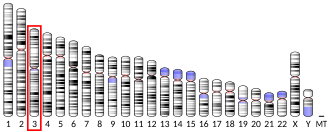
Delta-aminolevulinate synthase 1 also known as ALAS1 is a protein that in humans is encoded by the ALAS1 gene.56 ALAS1 is an aminolevulinic acid synthase.
Delta-aminolevulinate synthase catalyzes the condensation of glycine with succinyl-CoA to form delta-aminolevulinic acid. This nuclear-encoded mitochondrial enzyme is the first and rate-limiting enzyme in the mammalian heme biosynthetic pathway. There are 2 tissue-specific isozymes: a housekeeping enzyme encoded by the ALAS1 gene and an erythroid tissue-specific enzyme encoded by ALAS2.6
Mice lacking this gene exhibit embryonic lethality, indicating that ALAS is essential for early embryogenesis.7
References
References
- GRCh38: Ensembl release 89: ENSG00000023330 – Ensembl, May 2017
- GRCm38: Ensembl release 89: ENSMUSG00000032786 – Ensembl, May 2017
- "Human PubMed Reference:". National Center for Biotechnology Information, U.S. National Library of Medicine.
- "Mouse PubMed Reference:". National Center for Biotechnology Information, U.S. National Library of Medicine.
- Bishop DF, Henderson AS, Astrin KH (June 1990). "Human delta-aminolevulinate synthase: assignment of the housekeeping gene to 3p21 and the erythroid-specific gene to the X chromosome". Genomics. 7 (2): 207–214. doi:10.1016/0888-7543(90)90542-3. PMID 2347585.
- "Entrez Gene: Delta-aminolevulinate synthase 1".
- Okano S, Zhou L, Kusaka T, Shibata K, Shimizu K, Gao X, et al. (January 2010). "Indispensable function for embryogenesis, expression and regulation of the nonspecific form of the 5-aminolevulinate synthase gene in mouse". Genes to Cells. 15 (1): 77–89. doi:10.1111/j.1365-2443.2009.01366.x. PMID 20015225. S2CID 25018156.
External links
External links
Further reading
Further reading
- Goodfellow BJ, Dias JS, Ferreira GC, Henklein P, Wray V, Macedo AL (September 2001). "The solution structure and heme binding of the presequence of murine 5-aminolevulinate synthase". FEBS Letters. 505 (2): 325–331. doi:10.1016/S0014-5793(01)02818-6. PMID 11566198. S2CID 34879759.
- Cortesão E, Vidan J, Pereira J, Gonçalves P, Ribeiro ML, Tamagnini G (October 2004). "Onset of X-linked sideroblastic anemia in the fourth decade". Haematologica. 89 (10): 1261–1263. PMID 15477213.
- May BK, Bhasker CR, Bawden MJ, Cox TC (1990). "Molecular regulation of 5-aminolevulinate synthase. Diseases related to heme biosynthesis". Molecular Biology & Medicine. 7 (5): 405–421. PMID 2095458.
- Dwyer BE, Smith MA, Richardson SL, Perry G, Zhu X (August 2009). "Down-regulation of aminolevulinate synthase, the rate-limiting enzyme for heme biosynthesis in Alzheimer's disease". Neuroscience Letters. 460 (2): 180–184. doi:10.1016/j.neulet.2009.05.058. PMC 2743886. PMID 19477221.
- Furuyama K, Sassa S (2002). "Multiple mechanisms for hereditary sideroblastic anemia". Cellular and Molecular Biology. 48 (1). Noisy-le-Grand, France: 5–10. PMID 11929048.
- Guberman AS, Scassa ME, Cánepa ET (2005). "Repression of 5-aminolevulinate synthase gene by the potent tumor promoter, TPA, involves multiple signal transduction pathways". Archives of Biochemistry and Biophysics. 436 (2): 285–296. doi:10.1016/j.abb.2005.02.011. hdl:11336/99172. PMID 15797241.
- Roberts AG, Elder GH (2001). "Alternative splicing and tissue-specific transcription of human and rodent ubiquitous 5-aminolevulinate synthase (ALAS1) genes". Biochimica et Biophysica Acta. 1518 (1–2): 95–105. doi:10.1016/s0167-4781(01)00187-7. PMID 11267664.
- Szafranski K, Schindler S, Taudien S, Hiller M, Huse K, Jahn N, et al. (2007). "Violating the splicing rules: TG dinucleotides function as alternative 3' splice sites in U2-dependent introns". Genome Biology. 8 (8) R154. doi:10.1186/gb-2007-8-8-r154. PMC 2374985. PMID 17672918.
- Scassa ME, Guberman AS, Ceruti JM, Cánepa ET (2004). "Hepatic nuclear factor 3 and nuclear factor 1 regulate 5-aminolevulinate synthase gene expression and are involved in insulin repression". The Journal of Biological Chemistry. 279 (27): 28082–28092. doi:10.1074/jbc.M401792200. hdl:20.500.12110/paper_00219258_v279_n27_p28082_Scassa. PMID 15123725.
- Imabayashi H, Mori T, Gojo S, Kiyono T, Sugiyama T, Irie R, et al. (August 2003). "Redifferentiation of dedifferentiated chondrocytes and chondrogenesis of human bone marrow stromal cells via chondrosphere formation with expression profiling by large-scale cDNA analysis". Experimental Cell Research. 288 (1): 35–50. doi:10.1016/S0014-4827(03)00130-7. PMID 12878157.
- Fujii H, Takahashi T, Matsumi M, Kaku R, Shimizu H, Yokoyama M, et al. (December 2004). "Increased heme oxygenase-1 and decreased delta-aminolevulinate synthase expression in the liver of patients with acute liver failure". International Journal of Molecular Medicine. 14 (6): 1001–1005. doi:10.3892/ijmm.14.6.1001. PMID 15547665.
- Zheng J, Shan Y, Lambrecht RW, Donohue SE, Bonkovsky HL (December 2008). "Differential regulation of human ALAS1 mRNA and protein levels by heme and cobalt protoporphyrin". Molecular and Cellular Biochemistry. 319 (1–2): 153–161. doi:10.1007/s11010-008-9888-0. PMID 18719978. S2CID 33770538.
- Roberts AG, Redding SJ, Llewellyn DH (2005). "An alternatively-spliced exon in the 5'-UTR of human ALAS1 mRNA inhibits translation and renders it resistant to haem-mediated decay". FEBS Letters. 579 (5): 1061–1066. doi:10.1016/j.febslet.2004.12.080. PMID 15710391. S2CID 32462861.
- Jung M, Ohl F, Stephan C, Rabien A, Kristiansen G, Radonić A, et al. (September 2007). "[Quantifying gene expression in prostate carcinoma. Which endogenous reference genes are suitable?]". Der Urologe. Ausg. A. 46 (9): 1083–1084. doi:10.1007/s00120-007-1436-0. PMID 17628775. S2CID 11640176.
- Guberman AS, Scassa ME, Giono LE, Varone CL, Cánepa ET (January 2003). "Inhibitory effect of AP-1 complex on 5-aminolevulinate synthase gene expression through sequestration of cAMP-response element protein (CRE)-binding protein (CBP) coactivator". The Journal of Biological Chemistry. 278 (4): 2317–2326. doi:10.1074/jbc.M205057200. hdl:20.500.12110/paper_00219258_v278_n4_p2317_Guberman. PMID 12433930.
- Ferreira GC, Cheltsov AV (2002). "Circular permutation of 5-aminolevulinate synthase as a tool to evaluate folding, structure and function". Cellular and Molecular Biology. 48 (1). Noisy-le-Grand, France: 11–16. PMID 11929042.
- Tsang HT, Connell JW, Brown SE, Thompson A, Reid E, Sanderson CM (September 2006). "A systematic analysis of human CHMP protein interactions: additional MIT domain-containing proteins bind to multiple components of the human ESCRT III complex". Genomics. 88 (3): 333–346. doi:10.1016/j.ygeno.2006.04.003. PMID 16730941.
This article incorporates text from the United States National Library of Medicine, which is in the public domain.