| Acanthicus adonis | |
|---|---|

| |
Scientific classification 
| |
| Kingdom: | Animalia |
| Phylum: | Chordata |
| Class: | Actinopterygii |
| Order: | Siluriformes |
| Family: | Loricariidae |
| Genus: | Acanthicus |
| Species: | A. adonis
|
| Binomial name | |
| Acanthicus adonis | |
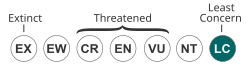
Acanthicus adonis, the adonis pleco or polka dot lyre-tail pleco, is a species of freshwater ray-finned fish belonging to the family Loricariidae, the suckermouth armoured catfishes, and the subfamily Hypostominae, the suckermouth catfishes.34 This species is found in South America.
Taxonomy
Acanthicus adonis was first formally described in 1988 by the Dutch ichthyologists Isaäc J. H. Isbrücker and Han Nijssen with its type locality given as Cametá on the Tocantins River at 0°14'S, 49°30.5'W in the Brazilian state of Pará.2 Eschmeyer's Catalog of Fishes classified the genus Acanthicus in the subfamily Hypostominae, the suckermouth catfishes, within the suckermouth armored catfish family Loricariidae.5
Individuals resembling the species have also been recorded from Amazonian Peru.67
Etymology
Acanthicus adonis is classified in the genus Acanthicus which is derived from the Greek akánthinos, meaning "thorny", alluding to entire upper surface of the head of A. hystrix, the type species, being armed with long erectile odontodes. The specific name, adonis, is from Greek mythology, where Adonis was a handsome young man loved by the goddess Aphrodite, here referring to the attractive spotted juvenile colour pattern.8
Appearance
Acanthicus adonis is among the largest armored catfish species and reaches a length of 1 m (3.3 ft).37
It is dark brown to black with numerous white spots as a juvenile. As the fish matures, the spots become less numerous and smaller, often disappearing entirely in large adults.37 Its close relative A. hystrix always lack white spots, regardless of age.69 In contrast, A. adonis lacks the vermiculated pattern often (but not always) found on the underparts of A. hystrix.69
Distribution and habitat
Acanthicus adonis is found in South America where it has been recorded from the Tocantins River basin in Brazil, in the Solimões River at the triple border between Brazil, Colombia and Peru, and in the Yujo River basin, part of the Ucayali River basin, in Peru. This catfish is found in white and clear water rivers where it is a demersal species.1 These fish are opportunistic omnivores.3
Utilisation
Acanthicus adonis is occasionally seen in the aquarium trade, but its massive adult size and territorially aggressive behavior means that a very large tank is required.73
References
References
- Salvador, G.N. (2023). "Acanthicus adonis". IUCN Red List of Threatened Species. 2023 e.T164512501A164512505. doi:10.2305/IUCN.UK.2023-1.RLTS.T164512501A164512505.en. Retrieved 5 March 2024.
- Fricke, Ron; Eschmeyer, William N. & van der Laan, Richard (eds.). "Species in the genus Acanthicus". Catalog of Fishes. California Academy of Sciences. Retrieved 24 May 2026.
- PlanetCatfish: Acanthicus adonis. Retrieved 17 May 2013
- Froese, Rainer; Pauly, Daniel (eds.). "Acanthicus adonis". FishBase. December 2011 version.
- Fricke, Ron; Eschmeyer, William N. & van der Laan, Richard (eds.). "Genera in the family Hypostominae". Catalog of Fishes. California Academy of Sciences. Retrieved 24 May 2026.
- Chamon, C.C. (2016): Redescription of Acanthicus hystrix Agassiz, 1829 (Siluriformes: Loricariidae), with comments on the systematics and distribution of the genus. Zootaxa, 4088 (3): 395–408.
- "Acanthicus adonis". SeriouslyFish. Retrieved 31 October 2017.
- Christopher Scharpf (18 January 2026). "Family LORICARIIDAE: Subfamily HYPOSTOMINAE Kner 1853 (Suckermouth Catfishes or Plecos)". The ETYFish Project Fish Name Etymology Database. Christopher Scharpf. Retrieved 24 May 2026.
- Chamon, C.C. (2011). Revisão taxonômica e relações filogenéticas do grupo Acanthicus (Siluriformes, Loricariidae) (PDF) (PhD thesis). São Paulo State University. doi:10.11606/T.41.2012.tde-13072012-101458.