 | |
 | |
| Names | |
|---|---|
| Preferred IUPAC name
1-Fluoro-2,4-dinitrobenzene | |
| Other names
Dinitrofluorobenzene
Sanger's reagent | |
| Identifiers | |
| |
3D model (JSmol)
|
|
| Abbreviations | DNFB, FDNB |
| ChEBI | |
| ChEMBL | |
| ChemSpider |
|
| ECHA InfoCard | 100.000.668 |
PubChem CID
|
|
| UNII | |
CompTox Dashboard (EPA)
|
|
| |
| |
| Properties | |
| C6H3FN2O4 | |
| Molar mass | 186.098 g·mol−1 |
| Appearance | yellow crystals1 |
| Density | 1.4718 g·cm−3 (54 °C)2 |
| Melting point | 25.8 °C (78.4 °F; 298.9 K)2 |
| Boiling point | 296 °C (565 °F; 569 K)2 |
| Hazards | |
| GHS labelling: | |

| |
| H301, H311, H331, H340, H350 | |
| P260, P280, P282, P315 | |
| Lethal dose or concentration (LD, LC): | |
LD50 (median dose)
|
50 mg/kg-1 |
LDLo (lowest published)
|
100 mg/kg-1 |
| Safety data sheet (SDS) | 1 |
Except where otherwise noted, data are given for materials in their standard state (at 25 °C [77 °F], 100 kPa).
| |


1-fluoro-2,4-dinitrobenzene (commonly called Sanger's reagent, dinitrofluorobenzene, DNFB or FDNB) is a chemical that reacts with the N-terminal amino acid of polypeptides. This can be helpful for sequencing proteins.
Preparation
In 1936, Gottlieb presented a synthesis in which 1-chloro-2,4-dinitrobenzene reacted with potassium fluoride (KF) in nitrobenzene:3

Uses
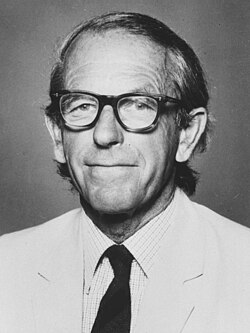
In 1945, Frederick Sanger described its use for determining the N-terminal amino acid in polypeptide chains, in particular insulin.4 Sanger's initial results suggested that insulin was a smaller molecule than previously estimated (molecular weight 12,000), and that it consisted of four chains (two ending in glycine and two ending in phenylalanine), with the chains cross-linked by disulfide bonds. Sanger continued work on insulin, using dinitrofluorobenzene in combination with other techniques, eventually resulted in the complete sequence of insulin (consisting of only two chains, with a molecular weight of 6,000).5
Following Sanger's initial report of the reagent, the dinitrofluorobenzene method was widely adopted for studying proteins, until it was superseded by other reagents for terminal analysis (e.g., dansyl chloride and later aminopeptidases and carboxypeptidases) and other general methods for sequence determination (e.g., Edman degradation).5
Dinitrofluorobenzene reacts with the amine group in amino acids to produce dinitrophenyl-amino acids. These DNP-amino acids are moderately stable under acid hydrolysis conditions that break peptide bonds. The DNP-amino acids can then be recovered, and the identity of those amino acids can be discovered through chromatography. More recently, Sanger's reagent has also been used for the rather difficult analysis of distinguishing between the reduced and oxidized forms of glutathione and cysteine in biological systems in conjunction with HPLC. This method is robust enough that it can be performed in such complex matrices as blood or cell lysate.67

References
References
- Oxford MSDS
- CRC Handbook of Chemistry and Physics, 90. edition, CRC Press, Boca Raton, Florida, 2009, ISBN 978-1-4200-9084-0, Section 3, Physical Constants of Organic Compounds, p. 3-260.
- Billroth Gottlieb, Hans (1936). "The Replacement of Chlorine by Fluorine in Organic Compounds". J. Am. Chem. Soc. 58 (3): 532–533. doi:10.1021/ja01294a502.
- Sanger, F (1945). "The free amino groups of insulin". The Biochemical Journal. 39 (5): 507–15. doi:10.1042/bj0390507. PMC 1258275. PMID 16747948.
- Joseph Fruton, Proteins, Enzymes, Genes: The Interplay of Chemistry and Biology. New Haven: Yale University Press, 1999. p. 216.
- Dominick, Pamela K.; Cassidy, Pamela B.; Roberts, Jeanette C. (2001). "A new and versatile method for determination of thiolamines of biological importance". Journal of Chromatography B: Biomedical Sciences and Applications. 761 (1): 1–12. doi:10.1016/S0378-4347(01)00298-5. PMID 11585123.
- Bronowicka-Adamska, Patrycja; Zagajewski, Jacek; Czubak, Jerzy; Wróbel, Maria (2011). "RP-HPLC method for quantitative determination of cystathionine, cysteine and glutathione: An application for the study of the metabolism of cysteine in human brain". Journal of Chromatography B. 879 (21): 2005–2009. doi:10.1016/j.jchromb.2011.05.026. PMID 21665555.
Literature
- Schaefer, T. (1962). "The Proton Magnetic Resonance Spectrum of 1-Fluoro-2,4-Dinitrobenzene". Canadian Journal of Chemistry. 40 (3): 431–433. doi:10.1139/v62-068.
- Nageswara Rao, B.D. (1964). "The1H and19F resonance spectra of 1-fluoro-2,4-dinitrobenzene". Molecular Physics. 7 (4): 307–310. Bibcode:1964MolPh...7..307N. doi:10.1080/00268976300101071.
- Wilkins, A.; Small, R. W. H. (1991). "Structure of 1-fluoro-2,4-dinitrobenzene". Acta Crystallographica Section C. 47 (1): 220–221. Bibcode:1991AcCrC..47..220W. doi:10.1107/S0108270190007326.