Open Yale Courses
PSYC 110: Introduction to Psychology
Mirrored from oyc.yale.edu · CC-BY-NC-SA-3.0 · Paul Bloom Brooks and Suzanne Ragen Professor Emeritus of Psychology
Mirrored from: oyc.yale.edu · Yale University · Psychology
Instructor: Paul Bloom Brooks and Suzanne Ragen Professor Emeritus of Psychology · License: CC-BY-NC-SA-3.0
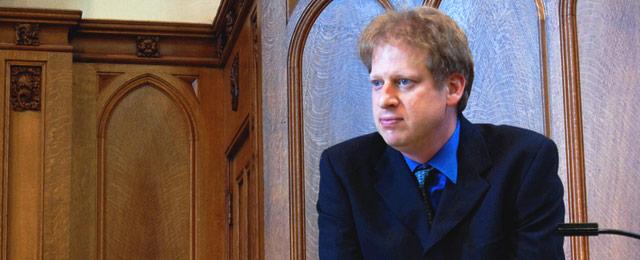
About this course
What do your dreams mean? Do men and women differ in the nature and intensity of their sexual desires? Can apes learn sign language? Why can’t we tickle ourselves? This course tries to answer these questions and many others, providing a comprehensive overview of the scientific study of thought and behavior. It explores topics such as perception, communication, learning, memory, decision-making, religion, persuasion, love, lust, hunger, art, fiction, and dreams. We will look at how these aspects of the mind develop in children, how they differ across people, how they are wired-up in the brain, and how they break down due to illness and injury.
Course details
Course Structure
This Yale College course, taught on campus twice per week for 75 minutes, was recorded for Open Yale Courses in Spring 2007.
Texts
Gray, Peter. Psychology . New York: Worth Publishers, 2007. Marcus, Gary, ed. The Norton Psychology Reader . New York: W. W. Norton & Company, 2006.
Requirements
Exams: There is a mid-term and a final. The final is on the last day of class. There will be no exam during the final exam period. Sample exams will be provided on the course website. You must have a Dean's Excuse to take a makeup exam.
Reading Responses: Starting on the third week of class, you will submit a short reading response every week. These responses will be graded pass/fail. There are ten responses, but you are allowed to skip or fail one of them without penalty (you only need to pass 9 of them). Details will be discussed in class.
Book Review: You will write one book review. Details will be discussed in class.
Experimental participation: All Introductory Psychology students serve as subjects in experiments. Specific details will be discussed in class.
Grading
Reading responses: 15% Book review: 20% Midterm examination: 30% Final examination: 35%
Syllabus
1 section · 24 lectures · links open at oyc.yale.edu.
Course sessions
- Introduction
- Foundations: This Is Your Brain
- Foundations: Freud
- Foundations: Skinner
- What Is It Like to Be a Baby: The Development of Thought
- How Do We Communicate?: Language in the Brain, Mouth and the Hands
- Conscious of the Present; Conscious of the Past: Language (cont.); Vision and Memory
- Conscious of the Present; Conscious of the Past: Vision and Memory (cont.)
- Evolution, Emotion, and Reason: Love (Guest Lecture by Professor Peter Salovey)
- Evolution, Emotion, and Reason: Evolution and Rationality
- Evolution, Emotion, and Reason: Emotions, Part I
- Evolution, Emotion, and Reason: Emotions, Part II
- Midterm Exam
- Brain and Perception (Guest Lecture by Professor Marvin Chun)
- Why Are People Different?: Differences
- What Motivates Us: Sex
- The Psychology, Biology, and Politics of Food (Guest Lecture by Professor Kelly Brownell)
- A Person in the World of People: Morality
- A Person in the World of People: Self and Other, Part I
- A Person in the World of People: Self and Other, Part II; Some Mysteries: Sleep, Dreams, and Laughter
- What Happens When Things Go Wrong: Mental Illness, Part I (Guest Lecture by Professor Susan Nolen-Hoeksema)
- What Happens When Things Go Wrong: Mental Illness, Part II
- The Good Life: Happiness
- Final Exam