Open Yale Courses
HIST 234: Epidemics in Western Society Since 1600
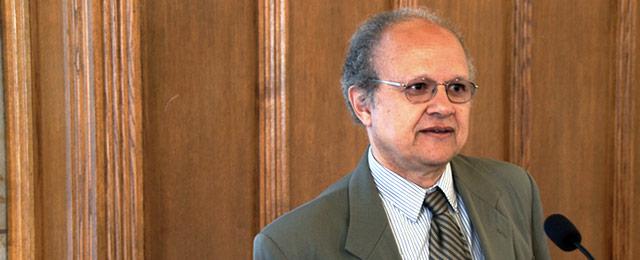
Mirrored from oyc.yale.edu · CC-BY-NC-SA-3.0 · Frank Snowden Andrew Downey Orrick Professor Emeritus of History
Mirrored from: oyc.yale.edu · Yale University · History
Instructor: Frank Snowden Andrew Downey Orrick Professor Emeritus of History · License: CC-BY-NC-SA-3.0
About this course
This course consists of an international analysis of the impact of epidemic diseases on western society and culture from the bubonic plague to HIV/AIDS and the recent experience of SARS and swine flu. Leading themes include: infectious disease and its impact on society; the development of public health measures; the role of medical ethics; the genre of plague literature; the social reactions of mass hysteria and violence; the rise of the germ theory of disease; the development of tropical medicine; a comparison of the social, cultural, and historical impact of major infectious diseases; and the issue of emerging and re-emerging diseases.
Course details
Course Structure
This Yale College course, taught on campus twice per week for 50 minutes, was recorded for Open Yale Courses in Spring 2010.
Texts
Brandt, Allan. No Magic Bullet . Oxford: Oxford University Press, 1987.
Barnes, David. The Making of a Social Disease: Tuberculosis in Nineteenth-Century France . Berkeley: University of California Press, 1995.
Chase, Marilyn. The Barbary Plague . New York: Random House, 2004.
Defoe, Daniel. Journal of the Plague Year . New York: Penguin, 2003.
Fenn, Elizabeth. Pox Americana . New York: Hill and Wang, 2001.
Snow, John. Snow on Cholera, New York: The Commonwealth Fund: Oxford University Press, 1936.
Snowden, Frank. The Conquest of Malaria . New Haven, CT: Yale University Press, 2006.
Snowden, Frank. "Emerging and Re-emerging Diseases: A Historical Perspective," Immunological Reviews . Vol. 225, Issue 1, pages 9-26, October 2008.
Snowden, Frank. Naples in the Time of Cholera . Cambridge: Cambridge University Press, 1995.
Verghese, Abraham. My Own Country . New York: Vintage Books, 1995.
Requirements
Midterm and final examinations, a course paper of six to eight pages, and weekly reading responses.
Grading
Midterm exam: 20% Final exam: 40% Course paper paper: 20% Reading responses and class participation: 20%
Syllabus
1 section · 28 lectures · links open at oyc.yale.edu.
Course sessions
- Introduction to the Course
- Classical Views of Disease: Hippocrates, Galen, and Humoralism
- Plague (I): Pestilence as Disease
- Plague (II): Responses and Measures
- Plague (III): Illustrations and Conclusions
- Smallpox (I): "The Speckled Monster"
- Smallpox (II): Jenner, Vaccination, and Eradication
- Nineteenth-Century Medicine: The Paris School of Medicine
- Asiatic Cholera (I): Personal Reflections
- Asiatic Cholera (II): Five Pandemics
- The Sanitary Movement and the "Filth Theory of Disease"
- Syphilis: From the "Great Pox" to the Modern Version
- Contagionism versus Anticontagionism
- Midterm Exam
- The Germ Theory of Disease
- Tropical Medicine as a Discipline
- Malaria (I): The Case of Italy
- Malaria (II): The Global Challenge
- Tuberculosis (I): The Era of Consumption
- Tuberculosis (II): After Robert Koch
- Pandemic Influenza
- The Tuskegee Experiment
- AIDS (I)
- AIDS (II)
- Poliomyelitis: Problems of Eradication
- SARS, Avian Influenza, and Swine Flu: Lessons and Prospects
- Final Q&A
- Final Exam