Open Yale Courses
ENGL 220: Milton
Mirrored from oyc.yale.edu · CC-BY-NC-SA-3.0 · John Rogers Professor Emeritus of English
Mirrored from: oyc.yale.edu · Yale University · English
Instructor: John Rogers Professor Emeritus of English · License: CC-BY-NC-SA-3.0
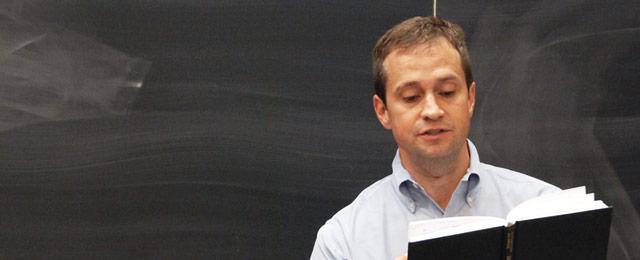
About this course
This class is a study of Milton's poetry, with attention paid to his literary sources, his contemporaries, his controversial prose, and his decisive influence on the course of English poetry. Throughout the course, Professor Rogers explores the advantages and limitations of a diverse range of interpretive techniques and theoretical concerns in Milton scholarship and criticism. Lectures include close readings of lyric and epic poetry, prose, and letters; biographical inquiries; examinations of historical and political contexts; and engagement with critical debates.
Course details
Course Structure
This Yale College course, taught on campus twice per week for 50 minutes, was recorded for Open Yale Courses in Fall 2007.Take this course for Yale College credit. John Rogers is teaching his course through the Yale Summer Online. This course runs from June 3 - July 5 and features extensive interaction with faculty and fellow students.http://summer.yale.edu/find-your-program/online-courses Click here to learn more and apply to this course.
Texts
Hughes, Merritt, ed. John Milton. Complete Poems and Major Prose. Macmillan Publishing Company: New York, 1957.
The Holy Bible: King James Version (optional)
Requirements
There will be a midterm (consisting of ten brief IDs of poetry, prose, names, and terms, drawn from all assigned material up to and including the first 55 lines of Paradise Lost , Book III), a final examination (2 hours long: short IDs and one longer thematic essay, covering the entire semester's material), and two short papers (4-6pp. and 6-8pp.). In addition, students must attend a weekly discussion section.
The papers should be a close reading of a sonnet or a short passage (10-20 lines) from any poem read in the course. You are free to choose your focus, keeping in mind that this is an exercise in mining the riches of a small lode. Two particularly useful types of analysis would include: 1) a discussion of the workings and effect of a Miltonic allusion to a previous text, biblical, classical, or English; and 2) the ways in which Milton uses formal devices (e.g. rhyme, meter, enjambment) to create poetic meaning. All papers should be submitted to the TFs.
Grading
Midterm examination: 15% Paper 1: 20% Paper 2: 25% Discussion section attendance and participation: 15% Final examination: 25%
Syllabus
1 section · 23 lectures · links open at oyc.yale.edu.
Course sessions
- Introduction: Milton, Power, and the Power of Milton
- The Infant Cry of God
- Credible Employment
- Poetry and Marriage
- Lycidas
- Areopagitica
- Paradise Lost, Book I
- God and Mammon: The Wealth of Literary Memory
- The Miltonic Simile
- The Blind Prophet
- Midterm Exam
- Paradise Lost, Book III
- Paradise Lost, Books V-VI
- Paradise Lost, Books VII-VIII
- Paradise Lost, Book IX
- Paradise Lost, Books XI-XII
- Paradise Lost, Books IX-X
- Paradise Lost, Books XI-XII (cont.)
- Paradise Regained, Books I-II
- Paradise Regained, Books III-IV
- Samson Agonistes
- Samson Agonistes (cont.)
- Final Exam